
Gajendra Thakur
A PARALLEL HISTORY OF MITHILA & MAITHILI LITERATURE- PART 19
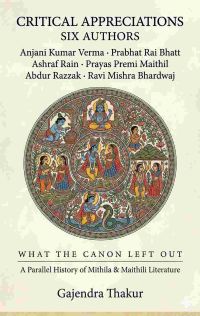
CRITICAL APPRECIATIONS of Anjani Kumar Verma Prabhat Rai Bhatt Ashraf Rain Prayas Premi Maithil Abdur Razzak Ravi Mishra Bhardwaj
CRITICAL APPRECIATIONS
Anjani Kumar Verma · Prabhat Rai Bhatt · Ashraf Rain · Prayas Premi Maithil · Abdur Razzak · Ravi Mishra Bhardwaj
Indian & Western Literary Theory · Videha Parallel History Framework · Navya-Nyāya of Gaṅgeśa
ANJANI KUMAR VERMA 'DAUJI'
अंजनी कुमार वर्मा 'दाऊजी'
Social Poetry · Peasant Voice · Koshi River Poet
Archive Presence & Works
Videha Sadeha 7 (Prelim_7): Ātmabala / Ojaka Bhoja / Samasya / Vāsantī Gīta / Dui Goṭa Bhūkha / Sukhāela Atīta / Berojagāraka Ātmā / Prajā ā Tantra / Kosī
Anjani Kumar Verma 'Dauji' appears in Videha Sadeha 7 with a substantial cluster of poems whose titles map the entire landscape of Mithila's social crisis: Ātmabala (Courage of the Self), Ojaka Bhoja (Feast of Energy/Force), Samasya (Problem), Vāsantī Gīta (Spring Song), Dui Goṭa Bhūkha (Two Kinds of Hunger), Sukhāela Atīta (Dried-Up Past), Berojagāraka Ātmā (Soul of the Unemployed), Prajā ā Tantra (People and System), and Kosī — the great river that defines and destroys Mithila's landscape. The pen-name 'Dauji' (दाऊजी, an elder-brother honorific in Hindi-Maithili culture) signals community embeddedness.
Thematic & Critical Analysis
Verma's thematic range is striking: from the personal-psychological (Ātmabala — inner courage as a response to adversity) to the social-political (Berojagāraka Ātmā — unemployment as a condition of the soul, not merely the pocket; Prajā ā Tantra — the people vs the system). The Vāsantī Gīta alongside Samasya creates a characteristic Parallel History juxtaposition: the celebration of spring (with its Maithili folk-cultural resonances of Basant Panchami and Vidyapati's spring songs) placed against the hard reality of 'problem'. His Kosī poem situates him in the tradition of Mithila's flood-poetry — the Koshi river as both life-giver and destroyer, the perennial trauma of Mithilanchal's agricultural communities. Dui Goṭa Bhūkha (Two Kinds of Hunger) suggests a poetics of doubled deprivation — physical hunger and the hunger for dignity, recognition, or meaning. This duplication is a characteristic feature of subaltern poetry in the Videha Parallel History.
Theoretical Frameworks
Bharatamuni's rasa framework: the juxtaposition of Vīra-rasa (the courage of Ātmabala) with Karuṇa-rasa (the pathos of Sukhāela Atīta, Berojagāraka Ātmā) produces the characteristic rasa-complex of committed social poetry. Gaṅgeśa's Navya-Nyāya anumāna: each poem proceeds from a specific observed social fact (unemployment, flood, political dysfunction) through a vyāpti (general principle of social injustice) to a sādhya (the indictment of the system). Gramsci's organic intellectual: Verma writes from within the Mithila peasant and working community, naming its specific crises in their own registers. The Videha Parallel History Framework: his inclusion in Sadeha 7 alongside major figures confirms his place in the democratic literary community.
Select Bibliography
Verma, Anjani Kumar 'Dauji'. Ātmabala et al. Videha Sadeha 7 (Prelim_7). ISSN 2229-547X. www.videha.co.in. | Bharatamuni. Nāṭyaśāstra. Tr. M. Ghosh. Calcutta: ASB, 1951. | Gramsci, A. Prison Notebooks. Tr. Hoare & Smith. London: LW, 1971. | Gaṅgeśa. Tattvacintāmaṇi. Tr. Phillips & Tatacharya. Hackett, 2004.
PRABHAT RAI BHATT
प्रभात राय भट्ट
Social Poet · Children's Writer · Ghazal Composer · Mithila Identity
Archive Presence & Works
Sadeha 6: Roṭī Rojīka Khojī | Sadeha 7: Janma lelaum + Yātrā | Sadeha 9: Chunamun (bāla kavitā) | Sadeha 11: Gīta 1–4 + Ghazal | Sadeha 36: Mithilā Garbhaputra + Kichu Ghazal + Gīta: Viraha / Daheja Mukta Mithilā Banābu
Prabhat Rai Bhatt has one of the most consistently documented presences across the Videha archive: confirmed in Sadeha 6, 7, 9, 11, and 36 — spanning the entire range of the Videha project from its earliest phase to its mature period. His Sadeha 6 piece Roṭī Rojīka Khojī (Seeking Bread and Livelihood) establishes immediately his commitment to the most fundamental social theme: the daily material struggle of the Maithili working community. His Sadeha 7 poem 'Janma lelaum hama jatae Sītā māeka achi gāma' (I was born where Sita's mother's village is) is a declaration of Mithila identity that locates the poet's birth in the sacred geography of Janaka's kingdom. Sadeha 9 shows his children's poetry strand (Chunamun Chunamun karait ciriā — the chirping bird). Sadeha 36's Mithilā Garbhaputra (Son of Mithila's womb) and Daheja Mukta Mithilā Banābu (Let Us Build a Dowry-Free Mithila) demonstrate his sustained social commitment alongside ghazal composition.
Thematic & Critical Analysis
Bhatt occupies a significant position within the Parallel History as a poet who links Mithila's sacred-identity poetry (Sita/Janaki as founding myth), its children's literary strand (the Chunamun bird poem), its social protest tradition (Roṭī Rojī, Daheja Mukta Mithilā), and its formal ghazal tradition. The Mithilā Garbhaputra poem articulates the 'son of Mithila' identity that is foundational to the Videha project: the claim that Mithila's cultural geography constitutes a distinct civilisational identity that is neither merely Bihari nor merely Indian but specifically Maithili. The Daheja Mukta Mithilā Banābu poem is one of the most direct anti-dowry manifestos in the Videha archive — using the gīta form (song) for direct social advocacy.
Theoretical Frameworks
Dhvani (Ānandavardhana): 'Janma lelaum hama jatae Sītā māeka achi gāma' generates cascading dhvani — the poet's birth in Sita's geographical home implies his identity as Sita's devotee, as Mithila's son, as the bearer of a civilisational heritage. Navya-Nyāya: the vyāpti in 'Daheja Mukta Mithilā Banābu' — the general principle that dowry is incompatible with the dignity of Mithila's daughter — leads to the sādhya of social transformation. Fanon (Wretched of the Earth): the poet's identification with the 'garbhaputra' (womb-son) of Mithila is the nationalist-cultural phase of anti-colonial self-recovery. The Videha Parallel History Framework: Bhatt's span across six Sadeha volumes makes him one of its most continuously documented poets.
Select Bibliography
Bhatt, Prabhat Rai. Works in Videha Sadeha 6, 7, 9, 11, 36. ISSN 2229-547X. www.videha.co.in. | Fanon, F. Wretched of the Earth. Tr. Farrington. New York: Grove, 1963. | Ānandavardhana. Dhvanyāloka. Tr. Krishnamoorthy. Dharwar: KU, 1974. | Gaṅgeśa. Tattvacintāmaṇi. Hackett, 2004.
ASHRAF RAIN
अशरफ राईन
Ghazal Poet · Muslim Maithili Voice · Inter-community Bridge
Archive Presence & Works
Sadeha 17 (Prelim_17): Ghazal (p. 1137) | Sadeha 19 (Prelim_19): Ghazal (p. 993)
Ashraf Rain (अशरफ राईन) is a Maithili ghazal poet whose presence in Videha — two ghazals across Sadeha 17 and 19 — represents one of the most significant dimensions of the Parallel History Framework: the inclusion of Muslim Maithili voices in the democratic archive. His name 'Rain' is a Muslim community surname found in Mithila and the wider Bihar-UP region, and his first name Ashraf is a classical Arabic name meaning 'noble/honourable'. The spelling 'Rāīna' is the Maithili/Hindi form of the surname. His ghazal contributions place him in a tradition with ancient precedent: the ghazal itself is an Arabic-Persian form, and Muslim poets have been central to its history from Rumi through Ghalib to Dushyant Kumar's democratic successors.
Thematic & Critical Analysis
The presence of Ashraf Rain in the Videha ghazal tradition is culturally significant beyond his individual contributions. The ghazal's origins in Arabic-Persian culture, its transmission through Urdu to Hindi and Maithili, means that Muslim practitioners of the Maithili ghazal are in one sense returning the form to its cultural source — using an Islamic-origin literary form in a new regional language context. In the contemporary political climate of India where Hindu-Muslim cultural boundaries are often artificially sharpened, the Muslim Maithili ghazal poet's participation in a Maithili literary platform is itself a statement of cultural unity. The Videha Parallel History's inclusion of Ashraf Rain alongside Hindu Maithili ghazal poets enacts the democratic, pluralist literary community that the Framework champions.
Theoretical Frameworks
Rasa analysis: The ghazal's primary rasa — Śṛṅgāra (love/longing) in its classical form, modulated toward Karuṇa and Vīra in its modern social form — is independent of the practitioner's religious identity. Gaṅgeśa's śabda-pramāṇa: the Muslim Maithili poet's testimony is equally valid pramāṇa as the Hindu poet's — the conditions of śabda-pramāṇa (knowledge, honest intention, accurate communication) are not religiously conditional. Bakhtin's heteroglossia: Rain's presence in the Videha ghazal tradition introduces the heteroglossic voice of Maithili's Muslim community into a literary space that risks being monoculturally Hindu. Habermas's public sphere: the Maithili literary public sphere requires Muslim voices for its democratic completeness.
Select Bibliography
Rain, Ashraf. Ghazal. Videha Sadeha 17, p. 1137; Sadeha 19, p. 993. ISSN 2229-547X. www.videha.co.in. | Bakhtin, M. Dialogic Imagination. Tr. Emerson & Holquist. Austin: UTAP, 1981. | Habermas, J. Structural Transformation of the Public Sphere. Tr. Burger. MIT, 1989. | Gaṅgeśa. Tattvacintāmaṇi. Hackett, 2004.
PRAYAS PREMI MAITHIL
प्रयास प्रेमी मैथिल
Dramatist · Mass-Scale Poet · Committed Voice · Dual-Mode Author
Archive Presence & Works
Sadeha 19 (Prelim_19): Drama 'Janma Daita Achi Māṃ Bāpa Karama Tō Apanehī' pp. 79–145 [67 pages] + Kichu Kavitā, Kichu Ghazal pp. 1184–1315 [131 pages]
Prayas Premi Maithil is among the most voluminous contributors to any single Videha Sadeha volume: his contributions to Sadeha 19 total nearly 200 pages — 67 pages of drama and 131 pages of poetry/ghazals. The drama title 'Janma Daita Achi Māṃ Bāpa Karama Tō Apanehī' (Parents give birth; karma, however, is one's own) is a philosophically loaded statement about the relationship between heredity and agency — a theme of direct social relevance in a caste-stratified society where 'karma' is often invoked to justify inherited social position. The drama appears to argue the opposite: that karma (action/destiny) is one's own making, not determined by birth. The poetry collection 'Kichu Kavitā, Kichu Ghazal' (pp. 1184–1315) with 131 pages represents one of the largest single poetry contributions in the archive. His pen-name 'Premi Maithil' (Maithili-lover or beloved-of-Mithila) signals his identification with the Mithila cultural community.
Thematic & Critical Analysis
The philosophical argument of the drama title — that action-karma transcends birth — is directly relevant to the anti-casteist strand of the Videha Parallel History. In Brahminical social theory, one's karma is partially determined by birth (the karma of previous lives determines present-life birth into a caste); Prayas Premi's drama appears to contest this by asserting individual agency over destiny. This positions the work in the tradition of Ambedkarite thought — which rejected karma-determinism as a justification for caste hierarchy — as well as in the Bhakti tradition's assertion that devotion transcends caste. The enormous scale of his poetry contribution suggests a poet of considerable productivity and commitment, whose work spans many themes and occasions.
Theoretical Frameworks
Bharatamuni's Nāṭyaśāstra: the 67-page drama must be analysed through its primary rasa (likely Vīra — heroic assertion of individual agency — combined with Karuṇa and Raudra against social injustice). Navya-Nyāya anumāna of the drama title: hetu = parents give birth; vyāpti = but birth does not determine action; sādhya = therefore one's karma is one's own. Ambedkar's karma-critique (Annihilation of Caste, 1936): the philosophical argument against birth-determinism that the drama title encodes. Bourdieu's habitus (Distinction, 1979): the drama potentially explores how inherited social position (habitus) can be transformed through conscious agency. The Videha Parallel History Framework: the scale of Prayas Premi's contribution demonstrates the archive's commitment to mass-scale democratic literary production.
Select Bibliography
Prayas Premi Maithil. Drama + Poetry. Videha Sadeha 19 (Prelim_19), pp. 79–145, 1184–1315. ISSN 2229-547X. www.videha.co.in. | Ambedkar, B.R. Annihilation of Caste. Ed. Arundhati Roy. Verso, 2014. | Bourdieu, P. Distinction. Tr. Nice. Cambridge: HUP, 1984. | Gaṅgeśa. Tattvacintāmaṇi. Hackett, 2004.
ABDUR RAZZAK
अब्दुर रज्जाक
Muslim Maithili Short Fiction Writer · Political Satirist · Dalit-Solidarity Voice
Archive Presence & Works
Sadeha 16: Ghoramaṭhā Rājanaitika (p. 523) | Sadeha 17: Gāmaka Caubaṭiyā Para + Raudī Parala Achi (pp. 738–741) | Sadeha 18: Kichu Prema Bihāni Kathā + Rājanaitika Bihāni Kathā + Katāraka Mausama (full section) | Sadeha 19: Bīhani Kathā 1 & 2 (pp. 188–190) + Kichu Katā + Kichu Ghazal + Musahara Ḍoma ā Camāra (pp. 1174–1183) | Sadeha 20: Bīhani Kathā (pp. 472–473)
Abdur Razzak is one of the most consistently present and most thematically significant Muslim Maithili fiction writers in the Videha archive, with confirmed contributions across five Sadeha volumes. His work is remarkable for combining three distinct literary modes: bīhani kathā (very short fiction), the qatā (short lyric poem), and the ghazal. His Sadeha 19 contribution 'Musahara Ḍoma ā Camāra' (Musahar, Dom, and Chamar) is the most politically direct piece in his documented corpus: a title that names three of Bihar-Mithila's most oppressed Dalit communities — the Musahar (rat-catching community, among India's most marginalised), the Dom (death-ritual workers), and the Chamar (leatherworkers). A Muslim writer's explicit solidarity with Hindu Dalit communities is a political statement of the first importance in the communally polarised landscape of contemporary India. His Sadeha 17 pieces 'Gāmaka Caubaṭiyā Para' (At the Village Crossroads) and 'Raudī Parala Achi' (The Drought Has Fallen) are situated in the rural crisis landscape that dominates Parallel History fiction. 'Ghoramaṭhā Rājanaitika' (Political Mire/Swamp) is a politically satirical piece whose title encodes the metaphor of politics as quicksand or mire — a figure of speech deeply embedded in Maithili.
Thematic & Critical Analysis
Razzak's work is exemplary of what the Videha Parallel History means by democratic solidarity: a Muslim writer engaging not only with Muslim community concerns but with the most marginalised Hindu Dalit communities — Musahar, Dom, Chamar — whose oppression is compounded by both caste hierarchy and economic marginalisation. The bīhani kathā on love (Sadeha 18's Kichu Prema Bihāni Kathā), political themes (Rājanaitika Bihāni Kathā), and the Katāraka Mausama series demonstrate generic range. 'Katāraka Mausama' (Season of Queue/Line) is likely a piece on demonetisation or similar social disruption — the 'queue' (katār) being a central image of the demonetisation period. His ghazals and qatā place him in the tradition of Muslim contribution to Maithili's Arabic-Persian-origin forms.
Theoretical Frameworks
Fanon's solidarity across communities (Wretched of the Earth): Razzak's Musahara-Ḍoma-Camāra piece enacts precisely the cross-community solidarity that Fanon argues is necessary for genuine liberation from colonial/caste oppression. Navya-Nyāya pratyakṣa: his bīhani kathā's short-fiction epistemology is that of direct, positioned knowledge — the Muslim Mithila writer's pratyakṣa of the village crossroads and the drought. Gaṅgeśa's śabda-pramāṇa: the testimony of a minority-community writer about both his own community's experience and his solidarity with Dalit communities is doubly authoritative pramāṇa. Spivak ('Can the Subaltern Speak?'): Razzak's writing creates a literary space for the Musahar-Dom-Chamar voices who cannot easily speak for themselves.
Select Bibliography
Razzak, Abdur. Works in Videha Sadeha 16, 17, 18, 19, 20. ISSN 2229-547X. www.videha.co.in. | Fanon, F. Wretched of the Earth. Grove, 1963. | Spivak, G.C. 'Can the Subaltern Speak?' in Nelson & Grossberg (eds.). Marxism and the Interpretation of Culture. UIUP, 1988. | Gaṅgeśa. Tattvacintāmaṇi. Hackett, 2004.
RAVI MISHRA 'BHARDWAJ'
रवि मिश्र 'भारद्वाज'
Āzād Ghazal Poet · Social Lyricist · Free-Verse Practitioner
Archive Presence & Works
Sadeha 7 (Prelim_7): Antima Kṣaṇame / Marahama / Matadāna / Kaleśa / Āzād Ghazal 1–5 / Navakī Bahuriyā | Sadeha 36 (Prelim_36): Āzād Ghazal (pp. 2047–2048)
Ravi Mishra 'Bhardwaj' (रवि मिश्र 'भारद्वाज') contributes primarily in the āzād ghazal (free/liberated ghazal) form — appearing in Sadeha 7 with five āzād ghazals alongside substantive non-ghazal poems, and in Sadeha 36 with further āzād ghazals. His Sadeha 7 titles reveal a poet of both public and private concerns: Antima Kṣaṇame (In the Final Moment), Marahama (Balm/Remedy/Consolation), Matadāna (Voting/Election), Kaleśa (Trouble/Distress), and Navakī Bahuriyā (The New Daughter-in-Law). The pen-name 'Bhardwaj' (भारद्वाज) evokes the sage Bharadvāja of the Rig Veda — one of the sapta-ṛṣis and the name of a major brahminical gotra. The pen-name is thus a claim to the Vedic intellectual heritage.
Thematic & Critical Analysis
Ravi Mishra's thematic range in Sadeha 7 is characteristic of the socially committed Maithili poet: Matadāna (Voting) engages with the democratic political process; Kaleśa (Distress) addresses suffering in an unspecified register; Antima Kṣaṇame (In the Final Moment) is a meditation on endings; Marahama (Balm) offers consolation; and Navakī Bahuriyā (The New Daughter-in-Law) engages with the figure of the bahuriyā — the young bride who enters her husband's household — which is one of the most socially loaded subjects in Maithili literature, the point at which dowry, domestic violence, gender inequality, and family honour all converge. His sustained commitment to the āzād ghazal form — in both Sadeha 7 and Sadeha 36 — marks him as a consistent practitioner of this formally liberated mode.
Theoretical Frameworks
The āzād ghazal's formal significance: by dispensing with strict bahr while retaining the sher structure and thematic range, the āzād ghazal makes the form more accessible for socially engaged content that cannot always accommodate the constraints of Arabic-Persian prosody. Kuntaka's vakrokti: 'Navakī Bahuriyā' as a title is obliquely political — the new daughter-in-law is nominally a domestic subject but in Maithili social reality she is the subject of dowry demands, domestic expectations, and potential violence. Navya-Nyāya anumāna: the Matadāna (Voting) poem's implicit argument — that democratic participation should produce genuine representation — follows the inferential structure of civic poetry. The Videha Parallel History: his consistent presence across two widely separated Sadeha volumes (7 and 36) confirms sustained engagement with the Videha project.
Select Bibliography
Mishra, Ravi 'Bhardwaj'. Works in Videha Sadeha 7 (Prelim_7), Sadeha 36 (Prelim_36). ISSN 2229-547X. www.videha.co.in. | Kuntaka. Vakroktijīvita. Ed. Krishnamoorthy. Dharwar: KU, 1977. | Gaṅgeśa. Tattvacintāmaṇi. Hackett, 2004.
अपन मंतव्य editorial.staff.videha@zohomail.in पर पठाउ।