
Gajendra Thakur
A PARALLEL HISTORY OF MITHILA & MAITHILI LITERATURE- PART 23
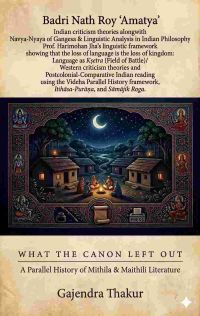
Badri Nath Roy 'Amatya' Indian criticism theories alongwith Navya-Nyaya of Gangesa &Linguistic Analysis in Indian Philosophy Prof. Harimohan Jha's linguistic framework showing that the loss of language is the loss of kingdom: Language as Kṣetra (Field of Battle)/ Western criticism theories and Postcolonial-Comparative Indian reading using the Videha Parallel History framework, Itihāsa-Purāṇa, and Sāmājik Roga.
Badri Nath Roy 'Amatya’ Indian criticism theories alongwith Navya-Nyaya of Gangesa &Linguistic Analysis in Indian Philosophy/ Western criticism theories and Postcolonial-Comparative Indian reading using the Videha Parallel History framework, Itihāsa-Purāṇa, and Sāmājik Roga.
I
A Linguistic Analysis of Amatya's 'Maithil Bhaiya Karoo Vichar' using the Frameworks of Hari Mohan Jha, Navya-Nyāya, and Classical Aesthetics
Methodology: Integrating Prof. Hari Mohan Jha's exposition of Śakti (potency), Lakṣaṇā (figurative meaning), Vyañjanā (suggestion), Avacchedakatā (limitorship), and Abhāva (negation) with Bharata's Rasa theory and Ānandavardhana's Dhvani. The analysis focuses on how Amatya manipulates linguistic potencies to evoke Bībhatsa (the odious) and Karuna (the pathetic).
Introduction: The Poem as a Linguistic Act
According to Prof. Hari Mohan Jha's synthesis in Trends of Linguistic Analysis in Indian Philosophy, a word possesses three potential potencies (vṛttis): Abhidhā (primary denotation), Lakṣaṇā (secondary figurative indication), and Vyañjanā (tertiary suggestion). Badri Nath Ray ‘Amatya’ is a master of all three. His poems operate on the literal level to denote social facts, but their real power lies in Lakṣaṇā and Vyañjanā. This analysis applies Jha's categories (drawn from Nyāya, Mīmāṃsā, and Grammar) to decode the linguistic machinery of Amatya's satire.
1. Abhidhā and Śakti: The Dictionary of Decay
Abhidhā is the fixed, conventional meaning of a word (rūḍhi). Amatya weaponizes abhidhā by juxtaposing it against a corrupted reality. In "मैथिल भैया करू विचार" (Maithil Bhaiya, Do Think), he lists items that have vanished:
"ओलक चटनी हकन कनैए / विलकोरक थधक्कार।" (Where has olive chutney gone? / The slap of vilkor).
As Jha explains rūḍhi words derive meaning from convention (samudāyaśakti). Amatya uses these culturally loaded terms (specific foods, rituals) as abhidhā for a lost lifeworld. The literal meaning is nostalgia; the vācyārtha (expressed meaning) is a catalogue of absence. The poet acts as a lexicographer of loss, forcing the reader to perceive that the śakti (potency) of these words to refer to living practices has been suspended.
2. Lakṣaṇā: The Figurative Monsters of "सासुरक हाल" (The State of the In-laws)
When literal meaning is obstructed (mukhyārtha bādha), we resort to Lakṣaṇā (figurative indication). Jha distinguishes jahat svārthā (abandoning own meaning) and ajahat svārthā (not abandoning own meaning). In "Sasurka Haal", the wife describes her in-laws not as humans but as mythological demons:
"साउस हमर सूर्पनखा / ससुर हमर काल।" (My mother-in-law is Surpanakha / My father-in-law is Yama/Death).
Here, the literal meanings of 'Surpanakha' (a demoness) and 'Kala' (death) are abandoned (jahat), but their qualities (cruelty, terror) are transferred to the in-laws. This is gaunī lakṣaṇā (figurative based on similarity), which Jha notes is akin to Rūpaka Alaṅkāra (metaphor). The lakṣyārtha (figurative meaning) is "my in-laws are as cruel as demons." The vyaṅgya (suggested meaning) is that the joint family system has become a living hell, a place of moral death.
3. Vyañjanā (Dhvani): The Implied Curse in "एतबे अछि अभिलाषा" (This is the Desire)
Vyañjanā is the suggestive power that goes beyond literal and figurative meaning. As Jha describes, it is the essence of poetic language (dhvani). In "Etabe Achi Abhilasha", the line:
"सुगरक खुँर-के पूजा होइए" (The hoof of the pig is worshipped)
Has a literal meaning (a pig's hoof is being worshipped) and a figurative meaning (corrupt leaders are being honored). But the vyaṅgyārtha (implied meaning) is far more devastating: The entire moral order of Mithila has been inverted. The dhvani is that what is impure (aśuddha) has been enthroned, and what is pure has been exiled. This is vācyātiśāyī vyaṅgya (implied meaning that excels the expressed), which, as Jha notes citing Ānandavardhana, is the highest form of poetry. The rasa evoked is Bībhatsa (disgust), but the dhvani is a call to pratikāra (resistance).
4. Avacchedakatā (Limitorship): Specifying the Corruption in "भ्रष्टाचारक भीष्म पितामह"
Jha devotes an entire chapter to the Navya-Nyāya technique of avacchedakatā—using limitors (avacchedaka) to specify the exact property, relation, or locus of a cognition. Amatya intuitively applies this in his satire. When he writes:
"भ्रष्टाचारक भीष्म पितामह" (The Bhishma-pitamah of corruption)
The term 'Bhishma-pitamah' is an avacchedaka (limitor). It specifies that the corruption is not ordinary; it is patriarchal, ancient, invincible, and respected despite its flaws. It limits the predicate 'corruption' to a specific type: institutionalized, hereditary, and shameless. Similarly, when he writes "चौरे सभ मूँहजोर भेल अछि" (All thieves have become brazen-faced), the avacchedaka is 'brazen-faced' (mūhajor), which specifies the prakāratā (adjectivity) of the thief. The thief is not just a criminal; he is a publicly acknowledged, unashamed criminal. This precision transforms general complaint into specific indictment.
5. Abhāva (Negation) as a Structural Principle: "सगरो पुष्पित अछि विष वेल"
Jha explains that Abhāva (negation/non-existence) is a real category in Indian logic. Amatya’s entire collection is structured around a series of abhāvas:
• Prior non-existence (prāgabhāva): The good society that is yet to be born.
• Posterior non-existence (pradhvaṃsābhāva): The traditions (chutney, pickle, vilkor) that have been destroyed.
• Absolute non-existence (atyantābhāva): Of justice, of dharma, of maryādā in the current system.
The line "सगरो पुष्पित अछि विष वेल" (Every flower is a poisonous creeper) is a positive statement that implies an absolute negation. The vācyārtha is "flowers are poison"; the vyaṅgyārtha is "there is no non-poisonous flower left." This is samsargābhāva (relational non-existence)—the absence of the relation of purity between the subject (Mithila) and its predicates (truth, beauty, goodness). The poet’s lament is the cognition of this all-pervasive abhāva.
Conclusion: The Sahṛdaya as Linguistic Analyst
Prof. Jha notes that the competent reader (sahṛdaya) is one who can grasp the tātparya (intention) of the speaker through avacchedaka and dhvani. Amatya’s work demands that the Maithil reader become a linguistic analyst—one who can see that the śakti of words like 'development' and 'leader' has been perverted, that the lakṣaṇā of 'family' now means 'battleground', and that the vyañjanā of every line is a scream for punaruddhāra (revival). His poems are not just art; they are śāstra (science) of social diagnosis.
II
A Western Psychoanalytic Reading (Freud & Lacan): The Symptom and the Symbolic Order of Mithila
It applies Freud’s repression/unconscious and Lacan’s Imaginary/Symbolic/Real to the poems on migration, dowry, and the grotesque. Sigmund Freud’s theory of the Unconscious and Repression, along with Jacques Lacan’s triad of the Imaginary, Symbolic, and Real. This analysis focuses on the text as a symptom of collective cultural neurosis and a cry against the disintegration of the symbolic father (tradition).
A Western Psychoanalytic Reading (Freud & Lacan): The Symptom and the Symbolic Order of Mithila
File Name: Amatya_Critique_Psychoanalytic.docx
Methodology: Applying Sigmund Freud’s theory of the Unconscious and Repression, along with Jacques Lacan’s triad of the Imaginary, Symbolic, and Real. This analysis focuses on the text as a symptom of collective cultural neurosis and a cry against the disintegration of the symbolic father (tradition).
Introduction: The Return of the Repressed
The anthology "Maithil Bhaiya Karoo Vichar" functions as a collective return of the repressed. Amatya’s aggressive satire and melancholic laments are not personal outbursts but the surfacing of Mithila’s suppressed anxieties regarding migration, dowry, and linguistic decay. The poems articulate the ego’s struggle to survive the collapse of the symbolic order.
1. The Absent Father & The Migrant’s Guilt (Freud)
Freud theorized that civilization is built on the renunciation of instinct. In Mithila, the economic instinct for survival forces the "Maithil Bhaiya" to migrate, leaving a void. In poems like "हम धिन छी प्यासलि" (I am the husband who is thirsty), Amatya voices the wife left behind:
"सावन प्यासल भादो प्यासल / हमहूँ धनि छी प्यासलि।" (The rains are thirsty, the autumn is thirsty / I, the husband, am thirsty).
However, the psychoanalytic turn reveals that the "thirst" is a displacement of libidinal energy. The migrant husband suffers from neurosis—he cannot enjoy his success because he has abandoned his roots. The poem "हम मैिथल छी" (We are Maithil) tries to suture this wound: "हम जातिके छोड़ देने छी / अहूँ जातिके छोड़ू भाय" (I have left my caste, you leave yours too). This is a plea to abandon the Imaginary divisions (caste) to salvage the Symbolic whole (Mithila), a desperate attempt by the ego to reconcile conflicting demands.
2. The Lacanian Real: Dowry as the Traumatic Kernel
For Lacan, the Real is the traumatic, unsymbolizable core of existence. In this anthology, Dowry (Dehej) functions as the Real—a horrifying wound that language cannot fully heal, only circle around.
Poem after poem returns to this trauma:
"सभटा दुष्ट देहेजक कारण / गड़बर भेल छै।" (All this is because of evil dowry / The situation is messed up).
In "सासुरक हाल" (The State of the In-laws), the narrator lists the family members as monsters: "साउस हमर सूर्पनखा / ससुर हमर काल" (My mother-in-law is Surpanakha, my father-in-law is Yama/Death). This is the Imaginary giving form to the Real. The dowry system has perverted the Symbolic order of kinship, turning relatives (Sanskrit: Bandhu) into predators. The subject is trapped in the obsessional neurosis of debt, forever trying to pay off a symbolic price for their existence.
3. The Superego’s Satire: The Rooster and the Pig
Freud noted that the Superego can be harsh and ironic. In "एतबे अछि अभिलाषा," the Superego speaks through Amatya’s satire to humiliate the corrupt ego of society. The Lacanian objet petit a (the unattainable object of desire) is represented by power and wealth, yet those who possess it are depicted as grotesque animals:
"कनहा कुत्ता प्रतिनीथि अछि" (A one-eyed dog is the representative).
"कौआ मेना शिक्षक भेल अछि" (The crow has become the teacher).
This is the discourse of the Master inverted. The poet, identifying with the oppressed, uses jouissance (excessive pleasure) in ridicule to tear down the false authority. The laughter generated by these lines is a defense mechanism against the horror of seeing incompetence enthroned.
Conclusion: The Symptom of the Wandering Subject
Ultimately, the subject of these poems is the Wandering Jew of Mithila—the "Sachcha Maithil" who is "Sutal" (asleep). The entire collection is a working through of the trauma of modernization. Amatya diagnoses the Maithil condition as one of alienation (from the land) and separation (from the mother tongue). The repeated cry "जाग-जाग सुच्चा मैथिल जाग" (Wake up, true Maithil, wake up) is the ego’s final, desperate appeal to reality, attempting to break through the dream of false development and re-enter a world where the name-of-the-father (Janak, the ideal king) still means something.
III
The Videha Parallel History & Postcolonial-Comparative Indian Framework
Methodology: Integrating the Videha Parallel History Framework (from `videha.co.in`) with Postcolonial Indian criticism (Partha Chatterjee's "political society," Dipesh Chakrabarty's "provincializing Europe") and classical Indian concepts of Itihāsa-Purāṇa (cyclical time of decline and renewal) and Sāmājik Roga (social disease). Prof. Harimohan Jha's linguistic framework show that the loss of language is the loss of kingdom. Language as Kṣetra (Field of Battle)
Methodology: Integrating the Videha Parallel History Framework (from videha.co.in) with Postcolonial Indian criticism (Partha Chatterjee's "political society," Dipesh Chakrabarty's "provincializing Europe") and classical Indian concepts of Itihāsa-Purāṇa (cyclical time of decline and renewal). This reading maps Amatya's Mithila as a colonized periphery within the modern nation-state, suffering from Sāmājik Roga (social disease).Language as Kṣetra (Field of Battle)
Introduction: The Second Collapse of Videha
The ancient Videha region transitioned from a monarchy to a Gaṇa-saṅgha (aristocratic republic) before being absorbed into the Magadha empire. The Videha ejournal archives this history alongside modern Maithili literature. Amatya’s anthology serves as a chronicle of the Second Collapse of Videha—this time, not by military conquest but by internal colonizatiaon through the modern Indian state's development apparatus, which has reduced Mithila to a source of migrant labor and raw materials.
1. Itihāsa-Purāṇa: The Cyclic Fall from Satya Yuga
The Indian tradition understands time as cyclical (Yugas). Amatya’s constant invocation of a lost golden age (the Rāmāyaṇa era of King Janaka, Sita, and the Videha kingdom) functions as a Paurāṇic critique of the present Kali Yuga. In "मिथिला महात्म्य" (The Glory of Mithila), he writes:
"स्वर्गक कामना छोडू मैथिल / धन्य-धन्य अछि मिथिला देश।" (Abandon the desire for heaven, O Maithil / Blessed, blessed is Mithila itself).
This is a direct inversion of the colonial/modernist narrative that peripheral regions are "backward." Amatya argues that Mithila was the center of Dharma. The current state of unemployment ("हमरा चाही रोजगार") is not "underdevelopment" but apakṣaya (decay) from a prior state of completeness. The repeated cry "जाग-जाग सुच्चा मैथिल जाग" (Wake up, true Maithil) is a call to remember this Paurāṇic identity and break the cycle of tamas (darkness/inertia).
2. Sāmājik Roga (Social Disease): Diagnosing the Body Politic
Classical Indian political thought (Kautilya's Arthaśāstra) often used medical metaphors for the state. Amatya adopts this framework, diagnosing Mithila as afflicted with a Sāmājik Roga (social disease). The symptoms are listed across poems:
Fever: "हमर करेज ठǷमे ठिठुरल" (My heart shivers) – "मिथिलाक गित".
Poison: "सगरो पुष्पित अछि विष वेल" (Every flower is a poisonous creeper) – "सगरो पुष्पित अछि विष वेल".
Cancer/Corruption: "भ्रष्टाचारक भीष्म पितामह" (The Bhishma-pitamah of corruption) – "चौरे सभ मूँहजोर भेल अछि".
The poet acts as the Vaidya (physician) who must first name the disease. The cure is not modern medicine (development schemes) but vaiśika śuddhi (purification of conduct) and a return to samatā-mūlaka (equality-based) social relations. This echoes the Nyāya emphasis on cikitsā (therapy) through correct knowledge.
3. Postcolonial Kṣatriya: The Poet as Anti-Colonial Warrior
In Postcolonial theory (Chatterjee), the "political society" of the periphery operates outside the formal structures of civil society. Amatya identifies the modern Panchayati Raj as a failed, colonizing structure that has replaced indigenous Sabhas (assemblies). He positions himself as a Linguistic Kṣatriya (warrior) defending the borders of Śabda (word) against the invading forces of Hindi/English:
"हम मैिथली शुद्ध लिखब से / मुदा आब ओ ज्ञान रहल नहि।" (I want to write pure Maithili / But now that knowledge is gone).
The loss of the Tirhuta script and the purity of Maithili is equivalent to the loss of a kingdom. The poet’s fight is not literary but military—an anti-colonial struggle against the "deep state" of Hindi-Urdu-English hegemony. The poem "हम मैिथल छी" (We are Maithil) is a declaration of sovereignty:
"हम जातिके छोड़ देने छी / अहूँ जातिके छोड़ू भाय।" (I have left my caste, you leave yours too).
This is a call to form a new jāti—not caste, but Maithil-hood—as a resistant political community. It parallels the Vajjika League's formation of a republican confederacy against the Magadhan empire.
4. Dehej as Upaniṣad (Colonial Transaction)
Amatya's most devastating critique is of dowry (dehej). In "बेटी बापक सन्ताप" (The Lament of a Daughter's Father), he writes:
"दुष्ट देहेजक उपनिवेशमे / हमहूँ छी बेटीकेर बाप।" (In the colony of evil dowry / I too am the father of a daughter).
The use of the word उपनिवेश (colony) is deliberate. Dowry is not a tradition; it is a colonial extraction of wealth from the already poor. It is the internal colony within the family, where the daughter becomes a commodity to be traded, and the father becomes a debtor. This reframes the classical Kanyādān (gift of a daughter) as a Kanyā-vikraya (sale of a daughter). The Shāstra has been inverted, and the poet’s lament is the cry of a śūdra father crushed by a system he cannot escape.
Language as Kṣetra (Field of Battle)
Prof. Harimohan Jha's linguistic framework show that the loss of language is the loss of kingdom. Language as Kṣetra (Field of Battle)
Prof. Hari Mohan Jha’s work demonstrates that Indian philosophers treated language as a precise tool for analyzing reality. Amatya’s lament about the loss of Maithili ("हम मैिथली शुद्ध लिखब से / मुदा आब ओ ज्ञान रहल नहि") is not nostalgia but a political diagnosis. When the Tirhuta script and pure vocabulary are lost, the avacchedaka (limiting criteria) for what constitutes 'Maithili' is erased. The postcolonial state, through Hindi/English hegemony, has imposed a vyadhikaraṇa abhāva (non-existence in a different locus)—the word 'Maithili' now exists, but its meaning has been relocated to a museum, not a living community. Amatya’s entire anthology is an attempt to restore sāmānādhikaraṇa (co-reference) between the signifier 'Maithil' and the signified 'dignity, land, and language'.
Conclusion: The Itihāsa of Theft
The final poem, "इतिहासक अनुपम पत्रा" (The Unique Page of History), tells a local folk tale of stolen shoes. In the Videha framework, this mundane story becomes allegorical: The modern Maithil has had his "footwear" (dignity, language, land, daughters) stolen while he slept. Amatya’s anthology is the Itihāsa (thus indeed it happened) of this theft. He attempts to be the Cāṇakya of this era—not by writing strategy, but by writing Vyatha (suffering) into the historical record. He invokes the Purāṇic duty of the kavi (poet) to bear witness to Dharma and Adharma, hoping that a future Yuga will read this page and finally "Jag" (wake up) to reclaim the lost kingdom of words.
अपन मंतव्य editorial.staff.videha@zohomail.in पर पठाउ।