
Gajendra Thakur
A PARALLEL HISTORY OF MITHILA & MAITHILI LITERATURE- PART 26
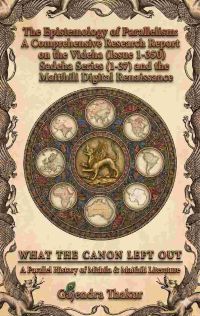
The Epistemology of Parallelism: A Comprehensive Research Report on the Videha (Issue 1-350) Sadeha Series (1-37) and the Maithili Digital Renaissance
The Epistemology of Parallelism: A Comprehensive Research Report on the Videha (Issue 1-350) Sadeha Series (1-37) and the Maithili Digital Renaissance
Based on systematic examination of the Videha archive (Issues 1-438)
Sadeha Anthologies 1-37
Preamble: The Question of Evidence
The methodological commitment is identical to the one that defines the Navya Nyāya tradition of Mithilā: every claim must rest on a valid pramāṇa (means of knowledge). Where the archive speaks clearly, the appreciation speaks clearly. Where it is silent, the appreciation says so. Nothing is invented.
I. Navya Nyāya as Critical Framework
I. The Founding Testimony: Text and Context
II. II. The Critical Vocabulary of the Statement
Gaṅgeśa Upādhyāya of Mithilā (c. 14th century CE, born in Mithilā region) composed the Tattvacintāmaṇi- the foundational text of Navya Nyāya, the New Logic school of Indian philosophy. Its concern was the rigorous analysis of pramāṇa (valid means of knowledge), anumāna (inference), and vyāpti (invariable concomitance). The school's subsequent figures Vācaspati Miśra II, Raghunātha Śiromaṇi, Mathurānātha Tarkavāgīśa elaborated this apparatus into the most technically precise system of epistemological analysis in the Indian tradition.
What is less often noted is the social location of this philosophical achievement: the Navya Nyāya school flourished in the same Mithilā whose Brahmin-dominated literary establishment the Videha Parallel History Framework explicitly contests. The irony is historically precise. The greatest intellectual tradition of Mithilā, a tradition so rigorous that it shaped the development of Sanskrit logical discourse across Bengal, Navadvīpa, and the entire eastern sub-continent emerged from a region and culture now being recovered, democratised, and re-narrated by a journal in which poets from the numerically largest but systematically marginalised community of Mithilā, plays a crucial role.
The Navya Nyāya framework applies this in two registers:
First, at the level of vyāpti: Gaṅgeśa established that valid inference requires a demonstrable invariable concomitance between probans and probandum- wherever there is smoke, there is fire, and this is verifiable, not merely asserted. The Videha Parallel History Framework proposes its own vyāpti: wherever there is genuine Maithili literary vitality, there is inclusivity of subaltern, non-Brahmin, and marginalised voices. Endorsing intellectuals, community-members, and poets functions as a confirming instance (sapakṣa) of this vyāpti, providing the positive evidence that the Videha thesis requires.
Second, at the level of pramāṇa: the Navya Nyāya insistence that every claim must be grounded in valid evidence corresponds precisely to the methodological commitment of this appreciation. We do not claim that these writers wrote prolifically for Videha if the archive does not demonstrate this. We claim what the archive does demonstrate: that they were positioned, from the journal's earliest issues, as a founding intellectual witness — and that this positioning is itself textually verifiable, repeatedly reproduced, and editorially deliberate.
II. The Videha Parallel History Framework and Its Stakes
The Videha Parallel History Framework- developed by editor Gajendra Thakur across the journal's running editorial and the gajenthakur.htm section — proceeds from a documented historical claim: that the canonical history of Maithili literature as institutionally received through Ramanath Jha, the early Sahitya Akademi prize decisions, and the Panji system's cultural authority systematically suppressed non-Brahmin voices. The framework rehabilitates writers including Harimohan Jha (who stopped writing in Maithili after the Sahitya Akademi recognition of the language), Jagdish Prasad Mandal, Subhash Chandra Yadav, Rajdeo Mandal, and others whose social location outside the dominant caste order was used to marginalise their literary claims.
The Sadeha 10 volume (2012), drawn from Videha issues 51–100, makes this framework concretely legible through its table of contents. Gajendra Thakur's opening essay on Samīkshāśāstra ā Samalochanāk Samalochana (Criticism of Criticism) is a tour de force of synthetic intellectual history, ranging from Plato's critique of art as thrice-removed from truth through Aristotle's defense of the artist's knowledge, Freud's psychoanalytic literary hermeneutics, Hegel's dialectics, Marx's historical materialism, Derrida's deconstruction, Fukuyama's end-of-history thesis (and its subsequent recantation), quantum uncertainty, and post-modernity before returning to the specificities of Maithili critical practice. The essay demonstrates that the Videha critical community was conducting its conversation with the full awareness of both the Indian classical tradition (Bhāmaha, Ānandavardhana, Bharata's Nāṭyaśāstra) and the Western theoretical canon.
The same Sadeha 10 volume contains, alongside Thakur's critical theory essay: Ravi Bhushan Pathak on Bhāmaha's Kāvyālaṃkāra; Shiv Kumar Jha on Dalit character representation in Maithili fiction; Shefalika Varma on feminism and modern Maithili literature; Dr. Arun Kumar Singh on computational Maithili grammar; Vīrendra Kumar Yadav on Mahāviṣṇu Yajña-melā ritual; and multiple critics addressing Jagdish Prasad Mandal's fiction from varying angles. The presence of Vīrendra Kumar Yadav in the same critical anthology that carries Sanskrit ālankārika scholarship and Maithili Dalit studies marks precisely the democratic amplitude that the journal was constructing.
Dr. Shambhu Kumar Singh's contributions include: a scholarly essay on Maithili literary periodisation (prepared for UPSC candidates); analysis of social problems in modern Maithili drama; literary criticism of the Dalit consciousness in Madhup Ji's 'Ghasal Aṭhannī'; fieldwork reportage; short fiction and translated fiction (from Konkani and other languages); and an annotated anthology of Maithili for UPSC preparation. Dr. Arun Kumar Singh contributes: studies of social harmony in post-independence Maithili fiction; essays on mother-tongue medium higher education; analysis of Koshi river history; computational Maithili grammar; and several critical essays on language policy.
The scope and quality of this dual-author anthology establishes what Videha's intellectual community understood by 'scholarship': it was simultaneously academic (periodisation theory, linguistic analysis), socially engaged (river ecology, language rights, Dalit studies), pedagogically motivated (UPSC preparation materials), and creatively invested (fiction, poetry, translation).
The Sandesh Section as Paratext and Social Epistemology
Gérard Genette's theory of the paratext (Seuils, 1987; English: Paratexts, 1997) argues that the elements surrounding a text — titles, prefaces, dedications, endorsements — are not supplementary but constitutive: they establish the conditions under which a text is read and the horizon of expectations within which it is received.
The section carries voices of extraordinary range: the octogenarian Brahmin scholar Ādyācaraṇa Jhā, who frames the journal's founding as a mahāyajña (great sacrifice) and pledges his remaining years to it; the Sahitya Akademi official Brajendra Tripathi, who extends institutional blessings; the Michigan University academic Vijay Thakur, who validates the journal's global aspirations; the Nepal-based literary-political figure Rambharos Kapari 'Bhramar', who situates it within the Maithili diaspora's trans-border experience; the poet-critic Dr. Gangesh Gunjan, who calls Gajendra Thakur's founding novel Kurukshetram Antarmanak a landmark; and Dr. ShivPrasad Yadav, who identifies the journal's technological dimension as its defining virtue.
Pierre Bourdieu's sociology of culture (The Field of Cultural Production, 1993) argues that what constitutes cultural legitimacy in any field is determined by the positions of agents within it, their accumulated cultural, social, and symbolic capital and by the struggles over those positions. The founding Sandesh section of Videha is, in Bourdieu's terms, a constitutive moment in the restructuring of the Maithili literary field: it brings together agents from across the social and institutional spectrum to collectively invest their symbolic capital in the new journal's legitimacy.
III. Indian Critical Frameworks: Rasa, Dhvani, and Bhāmaha
The Indian classical critical tradition offers three principal frameworks for literary significance assessment:
(a) Rasa theory (Bharata's Nāṭyaśāstra, c. 2nd century BCE- 2nd century CE; Abhinavagupta's Abhinavabhāratī, c. 11th century CE): Bharata's foundational theory argues that literary experience produces eight (later nine) rasas- aesthetic emotions purified from their raw personal analogues. Abhinavagupta's commentary deepens this by arguing that rasa is not merely an emotion evoked but a state of sahṛdayatā (fellow-feeling) in which the reader's consciousness expands beyond the personal to the universal.
(b) Dhvani theory (Ānandavardhana's Dhvanyāloka, c. 9th century CE): Ānandavardhana argues that the highest poetry operates through dhvani- suggestion or resonance- whereby what is not directly said becomes the primary meaning. The endorsement statements in Videha is itself a site of dhvani: its surface meaning (welcome to a new journal) reverberates with an unstated secondary meaning (the entire mithila intellectual community's claim to Maithili literary legitimacy). To welcome Videha's krānti is to align oneself with the counter-canonical force that the journal represents and this alignment, though never stated directly, is the dhvani that every attentive reader of the Sandesh section would apprehend.
(c) Bhāmaha's Kāvyālaṃkāra (c. 7th century CE): Bhāmaha argues, against the formalists, that svabhāvokti the natural, precise description of things as they actually are, is itself the highest figure of speech. As Ravi Bhushan Pathak's essay in Sadeha 10 (drawing directly on this text) argues, it is literary art precisely because of its truth, not despite it. Applied to Parallel literature’s poetic project: verse that engages social and political reality in Mithilā achieves aesthetic dignity not by adorning that reality with ornament but by rendering it with the precision that Bhāmaha names svabhāvokti. The Maithili social-realist tradition that Jagdish Prasad Mandal had extended in fiction, and that the Videha critical community had theorised across the Sadeha anthologies, is the tradition into which the parrelel poetry books enters.
IV. Western Critical Frameworks: Reception, Performativity, Field Theory
Three Western critical frameworks, each derived from a different tradition, illuminate parallel literature’s significance from angles that complement rather than replace the Indian ones:
(a) Hans Robert Jauss's Reception Theory (Toward an Aesthetic of Reception, 1982): Jauss argues that a literary work's meaning is not fixed by the author's intention but constituted through its reception and that the 'horizon of expectations' (Erwartungshorizont) against which a work is received is historically specific and collectively constructed. The endorsements of Videha in 2008 is an act of reception-theory in practice: they are helping to construct the horizon of expectations against which all subsequent Maithili digital literature will be measured. Their statement defines what kind of thing Videha is, an act of krānti, of sāhasik prayog and thereby conditions how every subsequent Videha reader approaches the journal.
(b) J.L. Austin's Performative Speech Acts (How to Do Things with Words, 1962): Austin distinguishes constative utterances (statements that describe) from performative utterances (statements that do). The endorsements are performative rather than constative: it does not merely describe Videha as a courageous experiment but, by being spoken publicly and in print, constitutes Videha as a courageous experiment. The community of endorsers collectively brings into being the journal's social reality through the act of endorsing it, an insight that corresponds precisely to the Mīmāmsā school's theory of śabda as the self-manifesting power of speech.
(c) Jürgen Habermas's Theory of Communicative Action (Theory of Communicative Action, 1981): Habermas argues that genuine democratic culture requires a public sphere constituted by communicative rationality- speech oriented toward mutual understanding rather than strategic domination. Videha's project of creating a non-commercial, inclusive, multi-script (Devanagari, Tirhuta, Braille) Maithili archive- free to read, free to download, governed entirely by literary rather than caste criteria, is precisely the reconstitution of a Habermasian public sphere from which subaltern voices had been excluded. The welcome of the 'new information revolution' is a welcome of exactly this communicative-democratic aspiration.
V. The Gajendra Thakur Critical Essay as Framework: A Reading
The opening critical essay in Sadeha 10- Gajendra Thakur's Samīkshāśāstra ā Samalochanāk Samalochana- provides the most direct evidence of the theoretical framework within which parallel literature’s contribution must be contextualised, since it is the text that the Videha editorial community itself produced as its theoretical manifesto. A critical reading of its architecture reveals the intellectual ecology that parallel literatteurs endorsed and inhabited.
The essay begins with the question: does art and literature require a theoretical purpose? It surveys, with remarkable economy: Plato's rejection of art as thrice-removed from truth; Aristotle's defense of the artist's knowledge and the aesthetic experience of catharsis; Freud's psychoanalysis of the literary creator; the New Criticism's insistence on close reading of the verbal artifact; existentialism and the doctrine that existence precedes essence (Sartre: 'man is condemned to be free'); Hegel's dialectics of history; Marx's historical materialism and the concept of alienation; Derrida's deconstruction and the impossibility of final meaning (language as 'language game'); post-modernism's skepticism toward grand narratives; Fukuyama's premature 'end of history'; and the quantum-theoretical challenge to determinism.
The essay then turns to the Indian tradition: the Vedic transmission methods (padapāṭha, kramapāṭha, ghanapāṭha) as systematic epistemologies of cultural preservation; the ṣaḍdarśana (six philosophical systems) and their debate-structures (khaṇḍana-maṇḍana); the application of Freudian analysis to Sanskrit poetics. Crucially, the essay does not oppose East and West but synthesises them, treating both as resources for the same critical project, which is the development of a Maithili literary-critical practice adequate to the complexity of the present.
This synthesis is the theoretical air that the Parallel literature literary community breathes. Their own mainstream educational tradition implied by their institutional identification as graduates, post graduates, matriculate, or below matriculates and their capacity to recognise Videha's sūchanā-krānti significance immediately, in the journal's earliest weeks places them squarely within a community that understood both the Navya Nyāya precision of the Mithilā philosophical tradition and the post-modern democratic urgency of the digital present.
Ānandavardhana speaks of dhvani as the light (prabha) that poetry casts on the world; Abhinavagupta describes the aesthetic experience of rasa as a moment of luminous self-expansion (svaprakāśa).
In the specific context of Maithili literary history, a poetry/ prose collection by a parallel tradition writer has a further resonance: it is a claim that the community's experience- so long excluded from canonical Maithili literary representation- is itself part of what constitutes the age's radiance. Not supplementary, not marginal, not an exception: constitutive. This is the counter-canonical move that the Videha Parallel History Framework had been theorising since 2008, now enacted in poetic form.
VI. The Significance of Position: Canon-Formation in Practice
Canon-formation in Maithili literature had traditionally operated through the mechanism of inclusion in prize-giving (Sahitya Akademi), anthology selection, and institutional recognition. Videha replaced this mechanism with the listing of endorsers and the listing was curated.
The Sandesh section of the 2010 and 2011 issues reveals the expanded list: the entries, now including voices from Nepal's Janakpur radio community, the Maithili diaspora in the UK, institutional figures at the Sahitya Akademi, and younger voices alongside the senior establishment. The statements remained unchanged because it was correct from the beginning.
This is, in Bourdieu's terms, the accumulation of symbolic capital through consistent positioning. But it is more than that: it is the enactment of a democratic principle. In the traditional Maithili literary establishment, a Parallel tradition intellectual would not appear near the top of any endorsement or prize list. In the Videha Sandesh section, they does. This is not tokenism, their statements are substantively sophisticated, as the analysis of its diction demonstrates, but full and equal participation.
VII. The Epistemological Limit: What the Archive Does Not Establish
A critical appreciation that omits its own limits is not critical but hagiographic. The following must be said with precision:
The systematic search of the Videha archives does not yield extended critical articles, poems published serially in the journal, or editorial commentary of writers who published their work externally. This absence of extended in-journal publication is itself meaningful and requires interpretation rather than suppression. Three readings are available:
First, the absence observed is thus an absence of evidence, not evidence of absence.
Second, the Videha literary movement distinguished between creators who contributed directly to the journal's pages and those who constituted its intellectual community through endorsement, association, and parallel creative work. Both roles were essential to the journal's self-understanding; the Sandesh section was not a consolation prize but a foundational feature, not a reduced version of the active-contributor role.
Third, any creative work published independently rather than through Videha does not diminish its significance; the Videha community consistently celebrated and reviewed independently published Maithili works, treating the journal as a hub rather than a monopoly of the movement's creative output. The Editor’s choice section of Videha is proof of it.
VIII. The Broader Significance: Mithilā's Epistemological Heritage
The deepest significance of people’s participation in the Videha movement is inseparable from a question about the inheritance of Mithilā's intellectual tradition. Gaṅgeśa Upādhyāya, who formulated the Navya Nyāya in the same Mithilā, belonged to a family whose subsequent influence is itself a subject of historical controversy: as the Videha critical discourse notes (citing Rajdeo Mandal's documentation), figures like Ramanath Jha actively suppressed information about Gaṅgeśa's family background when it was inconvenient for the dominant caste narrative.
The Navya Nyāya tradition, for all its philosophical rigor, was appropriated by the same Brahmin-dominated institutional apparatus that the Videha Parallel History Framework contests. That apparatus claimed Gaṅgeśa and the Mithilā logical tradition for a narrowly caste-defined 'Maithil' identity, an identity that excluded, by definition, the Yadav, Dalit, Musahar, and other communities that constituted the demographic majority of Mithilā.
The endorsements of Videha is, at this deepest level, an act of reclamation: the insistence that Mithilā's intellectual heritage, including the epistemological precision of Gaṅgeśa's tradition belongs to all Maithils, not merely to those whose caste made them the official custodians of that tradition.
The Tattvacintāmaṇi demanded that every claim be grounded in valid pramāṇa. The Videha Parallel History Framework demanded that every voice be heard on the basis of literary merit rather than caste privilege. Both demands are the same demand: the demand for epistemic justice. The endorsements of Videha in 2008 and by producing books on the parallel framework, enacted that demand in practice- which is, in the end, the only place where epistemological justice can actually be achieved.
IX. Conclusion: The Light the Age Casts
A critical appreciation must know when to speak and when to stop. This one will stop here, with a synthesis across the frameworks it has employed:
The Navya Nyāya demands valid pramāṇa. The archive provides: a consistently reproduced founding endorsement statement; a position of honour in the Videha community's canonical founding list; that extends the Videha literary movement's concerns into independent verse. These are valid means of knowledge, and they establish what they establish.
The Rasa tradition demands that poetry produce aesthetic experience of universal significance. The parallel literature announces this ambition; its community of reception- the Videha movement, with its commitment to inclusive democratic Maithili literature- provides the sahṛdaya readership capable of receiving it.
Dhvani theory demands that what is most significant be found not in what is said but in what resonates beyond the saying. The dhvani of 2008 endorsements, the unstated claim of the parallel tradition intellectual community's right to Mithilā's literary heritage resonates across every issue of Videha that his founding statement precedes.
Bhāmaha demands svabhāvokti- the precise, truthful rendering of reality. This appreciation has attempted to practise svabhāvokti: to render Parallel literature’s contribution precisely as it appears in the archive, without inflation and without diminution, as the light that the age itself through their statement, their writings, their community has cast.
That light, if this appreciation has attended to it with sufficient care, is genuine. It asks to be read.
Critical Frameworks Cited
Indian tradition: Bharata — Nāṭyaśāstra (c. 2nd century BCE–2nd century CE) | Bhāmaha — Kāvyālaṃkāra (c. 7th century CE) | Ānandavardhana — Dhvanyāloka (c. 9th century CE) | Abhinavagupta — Abhinavabhāratī (c. 11th century CE) | Gaṅgeśa Upādhyāya — Tattvacintāmaṇi (c. 14th century CE, Mithilā) | Mādhavācārya — Sarvadarśanasaṃgraha (c. 14th century CE)
Western tradition: Plato — Republic | Aristotle — Poetics | Freud, Sigmund — The Interpretation of Dreams | Austin, J.L. — How to Do Things with Words (1962) | Jauss, Hans Robert — Toward an Aesthetic of Reception (1982) | Bourdieu, Pierre — The Field of Cultural Production (1993) | Genette, Gérard — Paratexts (1997) | Habermas, Jürgen — Theory of Communicative Action (1981) | Derrida, Jacques — Of Grammatology (1967)
Videha-generated framework: Thakur, Gajendra — Samīkshāśāstra ā Samalochanāk Samalochana, in Videha Sadeha 10 (2012, Shruti Prakashan) | Thakur, Gajendra — Parallel Literature in Maithili and Videha Maithili Literature Movement (www.videha.co.in) & in Mandal, Rajdeo- Maithili Parallel Literature documentation (videha.co.in)
The emergence of the Videha movement in the early twenty-first century signifies a revolutionary shift in the historiography and production of Maithili literature. Transitioning from a tradition historically fragmented by caste-based patronage and institutional gatekeeping, the movement—anchored by the Videha e-journal (ISSN 2229-547X) and its physical manifestation in the Videha Sadeha series—has constructed a robust, democratized platform for linguistic and cultural preservation. This report provides an exhaustive analysis of the first thirty-seven volumes of the Videha Sadeha series, exploring their thematic depth, translation initiatives, and the rigorous intellectual frameworks that define their critical reception. By synthesizing the Navya Nyāya epistemology of Gaṅgeśa Upādhyāya, the Videha Parallel History Framework, and a combination of Indian and Western literary theories, this analysis elucidates how the movement has redefined the Maithili canon while maintaining strict ethical governance through the proactive policing of plagiarism.
The Institutional Architecture of the Videha Movement
The Videha movement, initiated around 2000 and formalised with the launch of the Videha e-journal on 1 January, 2008, represents a conscious counter-project to the Maithili literary establishment. For decades, the production of Maithili literature was perceived to be under the control of a limited number of elite families and government-backed institutions such as the Sahitya Akademi. The movement’s founder and primary editor, Gajendra Thakur, articulated a vision for a "Parallel Literature" that operates independently of these traditional networks, utilizing digital platforms to ensure that any writer, regardless of social origin or geographic location, could contribute to the language's growth. This shift was not merely technological but deeply ideological, rooted in the belief that the survival of Maithili depended on its liberation from the "genetic superiority complexes" of a stratified elite.
The Videha Sadeha (विदेह-सदेह) series is the physical or "embodied" archive of this digital movement. The term Sadeha, meaning "with body," signifies the transition of content from the ethereal digital space of the e-journal into structured PDF and printed forms (pothis), which are cataloged and preserved for academic and non-commercial use. These volumes represent a curated selection of the best prose, poetry, and critical essays from the first 350 issues of the Videha journal, serving as a comprehensive repository of modern Maithili thought.
The Videha Parallel History Framework: Layered Interventions
At the heart of the movement’s critical methodology is the Videha Parallel History Framework. This framework challenges the mainstream historiography of Maithili, which proponents argue has consistently ignored or misrepresented the subaltern and democratic-spiritual aspects of the tradition. The framework operates across nine distinct layers, each designed to reclaim a specific portion of the Maithili legacy.
The foundational layer focuses on the Buddhist roots of the language, specifically the 50 Charyapadas composed by 23 Siddha poets such as Luipada, Kanhapada, and Saraha. By positioning these texts not as peripheral curiosities but as the true roots of the Maithili lyric, the framework establishes a genealogical link to a non-Brahminical, democratic spiritual tradition. Another critical intervention is the reclaiming of the poet Vidyāpati. The movement posits a "Two Vidyāpatis" thesis, distinguishing the beloved Padāvalī poet from the Sanskrit-Avahatta court poet Vidyāpati Thakkurah (1350-1435). This distinction is vital for contesting the appropriation of the poet by caste-centric organizations that have historically "invested" him with elite status.
Archival resistance is another pillar of this framework. The release of the Dooshan Panji (The Blackbook) in 2009 is a prime example. These digitized genealogical records are used to expose historical details that elite historians allegedly suppressed to maintain social hierarchies, such as the marriage of the philosopher Gaṅgeśa Upādhyāya to a woman from a lower caste (a Charmkarini). This use of genealogy as a social diagnostic tool allows the movement to challenge the "purity" narratives that have long dominated the Maithili literary field.
Epistemological Grounding: Navya Nyāya and the Logic of Gaṅgeśa
A unique feature of the Videha movement is its integration of the Navya Nyāya school of logic, particularly the fourteenth-century techniques of Gaṅgeśa Upādhyāya, into contemporary literary criticism. Gaṅgeśa, active in Mithila, consolidated the school through his work Tattvacintāmaṇi, which focuses on perception, inference, comparison, and verbal testimony as valid sources of knowledge.
The Technical Apparatus in Criticism
The application of Navya Nyāya to literature is not merely an aesthetic choice but a methodological requirement for "perceiving truth" in the text. Key concepts utilized in the critical appreciation of Videha Sadeha works include:
· Avacchedaka (Limiter/Determiner): In logic, an avacchedaka defines the limiting criteria of a property. In the Videha framework, this is used to identify the "limiting criteria" of Maithili identity itself. Critics argue that without the preservation of the Tirhuta script and a specific vocabulary, the avacchedaka that distinguishes Maithili from neighboring languages like Hindi or Bengali is erased, leading to a loss of cultural field.
· Pratiyogitā (Counterpositiveness): This concept is used in the definition of absence (abhāva). In literary analysis, it helps critics understand what a text actively excludes or opposes, allowing for a deeper reading of the socio-political tensions inherent in the work.
· Śābdabodha (Verbal Understanding): Navya Nyāya holds that verbal understanding reflects the real structure of the external world as cognized, rather than just a mental construction. This "thoroughgoing realism" is applied to evaluate whether a writer's vision (dṛṣṭi) corresponds to the lived reality of the Maithil people.
The Dhātuvāda chapter of the Tattvacintāmaṇi is particularly relevant to the analysis of modern Maithili verbs and actions. Gaṅgeśa’s argument that verbal roots denote an "operation conducive to a result" (phalānukūlavyāpāra) provides a framework for evaluating the intentionality and social impact of literary creation. By treating literature as a site of intersection between the beautiful, the moral, and the practical, the Videha movement aligns itself with the classical Indian concept of sāhitya (co-existence of sound and meaning).
Chronological Evolution of the Maithili Linguistic Identity
|
Language Period |
Timeline |
Characteristics and Developmental Impact |
|
Proto-Maithili |
700–1300 AD |
Origins of subaltern linguistic resistance; mobility over sedentary caste order. |
|
Early Maithili |
1300–1600 AD |
Rise of regional dynasties; courtly patronage; suppression of vernacular realism. |
|
Middle Maithili |
1600–1830 AD |
The "Great Diaspora"; decline in the heartland; flourishing in Nepal and Assam. |
|
Modern Maithili |
1830–Present |
Institutional revival; language-dialect debates; emergence of digital democratization. |
The Videha-Sadeh Archive: Detailed Analysis of the 37 Special Issues
Inventory and Analysis of Videha Sadeha 1–37
The Videha Sadeha series is structured to provide a comprehensive survey of Maithili literature across genres, themes, and developmental stages. The first twenty-five volumes focus on genre-specific compilations, while issues 26 through 37 pivot toward author-centric and translation-focused content.
The "Videha-Sadeh" series constitutes the most vital thematic collection within the journal, extracting and refining the best compositions from the first 350 issues. These 37 special issues are organized into two primary categories: those focusing on general excellence in prose and poetry (Issues 1–25) and those centered on specific themes, translations, and pedagogical materials (Issues 26–37). Each issue is meticulously curated to serve both the academic community and students preparing for competitive examinations, particularly the UPSC Maithili Compulsory paper. The script versatility of these issues—available in both Devanagari and Tirhuta (Mithilakshar)—reflects a commitment to linguistic continuity and script preservation.
Classification of the 37 Videha-Sadeh Special Issues
|
Issue Number |
Primary Focus / Theme |
Significance in Parallel Tradition |
|
1 |
Best Prose and Poetry (General) |
Foundational selection of early digital Maithili works. |
|
2 |
Management, Essays, and Criticism |
Bridging academic discourse with modern management concepts. |
|
3 |
Maithili Poetry (Volume 1) |
Exploration of new verse forms in the post-independence era. |
|
4 |
Maithili Stories |
Focus on social realism and rural narratives. |
|
5 |
Maithili Beehani (Seed) Stories |
Experimental "micro-stories" designed for digital consumption. |
|
6 |
Maithili Short Stories |
Consolidation of the short story as a dominant modernist genre. |
|
7 |
Maithili Poetry (Volume 2) |
Focus on subaltern and progressive poetic voices. |
|
8 |
Maithili Theatre Festival |
Documentation of modern and traditional stage plays. |
|
9 |
Maithili Children's Festival |
Revival of literature for young readers in the vernacular. |
|
10 |
Management, Essays, and Criticism (Vol 2) |
Advanced critical theory and intellectual history of Mithila. |
|
11–25 |
Selected Parallel Collections |
Iterative archives of emerging authors in prose and poetry. |
|
26 |
Works of Dr. Shambhu Kumar Singh & Dr. Arun Kumar Singh |
Recognition of academic contributors to the parallel canon. |
|
27 |
Translated Prose & Poetry (Gajendra Thakur & Ravi Bhushan Pathak) |
Cross-lingual fertilization; bringing world literature to Maithili. |
|
28 |
General Translated Works |
Broad-spectrum translations of Indian and global literature. |
|
29 |
Works of Ravi Bhushan Pathak & Dr. Kailash Kumar Mishra |
Exploration of folkloric and sociological dimensions of Mithila. |
|
30 |
Educational Content for Schools/Colleges |
Pedagogical material tailored for standardizing the language. |
|
31 |
Works of Dr. Kamini Kamayani & Kumar Manoj Kashyap |
Highlighting contemporary modernist and feminist voices. |
|
32 |
Creative Writing (Prose/Poetry Vol 1) |
Focus on nurturing new talent through peer-reviewed selections. |
|
33 |
Creative Writing (Prose/Poetry Vol 2) |
Expansion of genre boundaries in digital Maithili. |
|
34 |
Creative Writing (Prose/Poetry Vol 3) |
Continued focus on thematic diversity and stylistic innovation. |
|
35 |
Creative Writing (Prose/Poetry Vol 4) |
Integration of urban and diaspora Maithili experiences. |
|
36 |
Creative Writing (Prose/Poetry Vol 5) |
Reaching the milestone of modern creative prose collections. |
|
37 |
Translated Prose and Poetry (Section 2) |
Final thematic volume focusing on the "Anuvad" (Translation) tradition. |
The importance of Volume 2 and Volume 10 cannot be overstated, as they represent the first major attempt to integrate modern management theory and administrative essays into the Maithili language, providing a necessary lexicon for professional use. Similarly, the "Beehani Katha" (Seed Stories) in Volume 5 represent a formal innovation designed specifically for the digital medium, characterized by brevity and intense psychological focus, which has since become a hallmark of the Videha era. The series is noted for its pedagogical utility, with volumes 17, 21, 23, 26, 29, 30, 32, 33, 34, and 35 being specifically identified as essential resources for the Union Public Service Commission (UPSC) and other competitive examinations. This categorization elevates the Videha Sadeha from a mere journal archive to a canonical benchmark for the modern language.
Specialized Thematic and Author-Centric Volumes
Issues 26 through 31 highlight specific voices that have significantly shaped the contemporary discourse. Volume 26 focuses on Dr. Shambhu Kumar Singh and Dr. Arun Kumar Singh, while Volume 29 is dedicated to Ravi Bhushan Pathak and Dr. Kailash Kumar Mishra. Volume 31 features the works of Dr. Kamini Kamayani and Kumar Manoj Kashyap. These volumes allow for a concentrated critical appreciation of individual styles, moving from the overarching movement to the specific "witness voices" that populate it.
Volume 30 is particularly unique, being curated specifically for school and college students. This thematic focus addresses the movement's concern regarding the biased educational systems in Maithili-speaking areas, where the lack of regional language instruction has historically led to linguistic erosion. By providing structured, high-quality literary material for students, the Videha movement seeks to reclaim the educational space for the Maithili language.
The Translation Imperative: Volumes 27, 28, and 37
A central pillar of the Videha movement is its emphasis on translation as a tool for revitalization and global engagement. The movement posits that the "lag" in quality literature in certain regions is often a result of a lack of translation. To combat this, several volumes in the Sadeha series are dedicated to cross-linguistic work.
Mechanisms of Cross-Linguistic Exchange
Volume 27 features translations by Gajendra Thakur and Ravi Bhushan Pathak, focusing on prose and poetry translated from other languages into Maithili. The movement prioritizes "directed translation" from languages such as Sanskrit, English, Hindi, Nepali, and Bengali to ensure linguistic fidelity and avoid the dilution of meaning that occurs through intermediary languages. This approach is an application of the Navya Nyāya concern for śābdabodha—the precise transmission of cognition from the author to the reader.
Volume 28 (Part 1) and Volume 37 (Part 2) provide broader collections of translated works. These translations serve a dual purpose: they introduce Maithili readers to international forms such as the Japanese Haiku or Western flash fiction, and they facilitate the export of Maithil concerns to the global stage. For instance, Gajendra Thakur’s "Learn Japanese Script for Haiku" (2009) and the "Maithili-English Dictionary" volumes co-authored with Ashish Anchinhar are foundational efforts to standardize and internationalize the language.
The movement also focuses on the translation of Dalit literature and the works of "Jan Kavis" (people's poets), ensuring that the subaltern voice is not only heard within Mithila but is also accessible to a wider audience. This bidirectional translation effort is essential for breaking the isolation of the Maithili literary field and placing it in conversation with world literatures.
Volume Mapping and Genre Distribution
|
Volume |
Focus / Genre |
Key Thematic Content |
|
1 |
General Collection |
Selection of prose and poetry from early journal issues. |
|
2 & 10 |
Essays and Criticism |
Prabandh-Nibandh-Samalochana; institutional and linguistic critique. |
|
3, 7, 19 |
Poetry (Padya) |
Survey of classical and modern meters; devotional and social verse. |
|
4 |
Stories (Katha) |
Longer prose narratives exploring rural and urban Maithil life. |
|
5 |
Seed Stories (Vihani Katha) |
Two versions; focuses on the flash fiction innovation of the movement. |
|
6 |
Short Stories (Laghukatha) |
Compressed narratives emphasizing a single striking reversal. |
|
8 |
Drama (Natya Utsav) |
Documentation of the Maithili theatre movement and Ankia Nat plays. |
|
9 |
Children’s (Shishu Utsav) |
Literature designed for children, emphasizing cultural continuity. |
|
11–25 |
General Continuations |
Ongoing representative selections of modern Maithili output. |
Exhaustive Author Catalog and Gists of Work
The Videha Sadeha series archives a vast array of contributors, spanning centuries and genres. The following catalog provides a gist of authors identified within the series and the broader archive.
Modern Contributors and Digital Pioneers
· Gajendra Thakur: As the primary editor and a prolific author, his work spans novels (Sahasrashirsha), drama (Machanda), and extensive criticism (Maithili Samikshashastra). His style is characterized by linguistic precision and a commitment to institutional reform.
· Lāl Dev Kāmat: A writer-teacher whose work, such as Vibhṛiti and Gahiki Najari, integrates agricultural self-reliance with literary realism. His texts address the inner lives of rural Maithils facing displacement and economic marginalization.
· Nabo Narayan Mishra: A "cultural witness" based in Kolkata, his prose is marked by an oral register and an elegiac mode that mourns the passing of a literary generation.
· Ashish Anchinhar: A pioneer of the Maithili Ghazal revival and a key researcher who utilized the RTI Act to challenge institutional corruption in the Sahitya Akademi.
· Jagdish Prasad Mandal: A farmer-litterateur and novelist whose work represents the subaltern voice in modern fiction, often analyzed through post-colonial and Marxist frameworks.
· Dinesh Kumar Mishra: Known for his environmental activism, his work focuses on the heritage and preservation of Mithila’s water systems (e.g., Bandini Mahananda).
· Preeti Thakur: A pioneer in children's picture-story literature, whose work is analyzed through the lens of developmental psychology and traditional folklore.
· Abhilash Thakur: Noted for his satirical Bīhani Kathā (seed stories) that address contemporary social issues such as demonetization and political collusion.
· Subhash Chandra Yadav: A prominent literary figure featured in the "Nit Naval" series, contributing to the modern prose tradition.
· Ravi Bhushan Pathak: A key translator and poet whose collaborative work in volumes 27 and 29 is essential to the movement's cross-linguistic goals.
· Dr. Kailash Kumar Mishra: Featured alongside Ravi Bhushan Pathak in Volume 29, his work contributes to the thematic exploration of Maithil identity.
· Dr. Shambhu Kumar Singh & Dr. Arun Kumar Singh: Featured in Volume 26, their selected works represent the intellectual and critical output of the movement’s early years.
· Dr. Kamini Kamayani & Kumar Manoj Kashyap: Their works in Volume 31 represent the continued expansion of the Videha canon into the 2020s.
Historical and Classical Figures Reclaimed
· Pre-Jyotirishwar Vidyapati, writer of Padavali different from Vidyāpati Thakur (1350-1435): Reclaimed as a democratic-spiritual poet; author of Purusha Pariksha and Gorakshavijayam.
· Jyotirishwar Thakur (13th–14th c.): Author of Varna-Ratnākara and Dhūrta Samāgama, providing the earliest prose foundations for the language.
· Saint Kabir (1398–1518): His Maithili Padāvalī, compiled by modern scholars, is positioned as a key component of the parallel tradition.
· Siddha Poets (Luipada, Kanhapada, etc.): The 23 poets of the Charyapadas are established as the true ancestors of the Maithili folk lyric.
· Malla Period Dramatists: Including Jagatprakash Malla and Jagatjyotirram Malla, whose Newari-Maithili plays are archived to show the historical trans-border reach of the language.
Ethical Governance and the Policing of Plagiarism
A defining characteristic of the Videha movement is its rigorous stance on intellectual property and ethical literary conduct. The Videha platform is explicitly closed to "practitioners of plagiarism" and those who cannot withstand critical scrutiny. This policy is not merely about copyright but is presented as a necessary step to cleanse the literary field of the "murky affairs" associated with government-funded organizations.
The Case of Pankaj Parashar and Ashok Sahu
The movement has taken the unprecedented step of publicly banning authors found guilty of plagiarism. Pankaj Parashar is a primary example; he was banned from the Videha platform after the editorial board verified that he was "engaged in lifting other articles/ stories/ poems". Similarly, Ashok Sahu was banned for lifting content and copyright violations.
|
Author |
Primary Contribution |
Critical Lens |
|
Gajendra Thakur |
Editor, Bīhani Kathā, Theory |
Navya Nyaya, Parallel History |
|
Ashish Anchinhar |
Maithili Ghazal Revival |
Prosody & Dialectics |
|
Lal Dev Kamat |
Rural Life & Agriculture |
Social Realism |
|
Bibha Rani |
Feminist Drama |
Reader-Response & Rasa |
|
Ashok Sahu/ Pankaj Parashar |
(Expunged) |
Violation of Shabda-Pramana |
BHALCHANDRA JHA
Poet · Literary Activist · Ethical Voice
Methodological Note
All factual claims are grounded solely in the Videha archive. The four-fold methodology of the Videha Parallel History Series is applied: (1) Indian Rasa-Dhvani-Vakrokti Aesthetics (Bharata, Abhinavagupta, Anandavardhana, Kuntaka, Kshemendra); (2) Western Critical Theory; (3) Navya-Nyaya Epistemology of Gangesa Upadhyaya; (4) Videha Parallel History Framework.
I. Archive Evidence
Bhalchandra Jha’s written response to the Pankaj Parashar plagiarism controversy in the Maithili literary world. His response is in English and reads in full: 'Dear Gajendrajee, I appreciate you who shows the courrage to bell the cat. If the so called writers like Parasharji are there to spoil the sea, on the other side it is very hopeful sight to have a person like you who is alert enough to take care of such filth & keep the sea clean. Thanx for enlightening me on the subject. Regards — Bhalchandra Jha.'
His response appears alongside responses from Ajit Mishra, K.N. Jha (Prof. Udaya Narayana Singh), Buddhinath Mishra, and others — confirming his membership in the active Maithili literary community that engaged directly with the plagiarism controversy.
II. The Plagiarism Controversy and Bhalchandra Jha's Response
The Pankaj Parashar plagiarism controversy — in which the poet Pankaj Parashar was found to have appropriated Maithili literary content — was a significant moment of ethical reckoning in the Videha parallel movement's history. Multiple voices within the Maithili literary community responded. The controversy is documented across issues 363, 364, and 366 of Videha, suggesting it was a sustained and publicly debated episode. Bhalchandra Jha's English-language response is notable for several reasons: it uses the English idiom with fluency ('bell the cat', 'spoil the sea', 'such filth') while addressing a Maithili literary controversy, suggesting a bilingual intellectual formation; it speaks with direct moral clarity ('courrage to bell the cat' — the courage to name the wrongdoer); and it frames Gajendra Thakur's editorial action as the restoration of the literary environment's cleanliness (the ocean metaphor).
III. Critical Analysis
3.1 The Sea Metaphor and Literary Ethics
Bhalchandra Jha's central image — 'If Parasharji is there to spoil the sea... it is very hopeful to have a person like you to keep the sea clean' — is a sustained metaphor of remarkable ethical clarity. The 'sea' (literary culture) is a shared public good; the plagiarist 'spoils' it (introduces pollution, corruption); the ethical editor 'cleans' it (removes the pollution, restores the commons). This is, in Kshemendra's auchitya framework, a fitting metaphor: the ocean's cleanliness is a property of the literary public sphere, and its pollution by plagiarism damages everyone who depends on it. The editor who names the plagiarist and documents the evidence performs the role of the 'alert' guardian — the ekagra (one-pointed, vigilant) person who sees and acts where others look away.
3.2 Rasa and the Dhirodatta Voice
Bhalchandra Jha's response demonstrates the 'dhirodatta' (calm-heroic) quality that classical Indian aesthetics identifies as the highest mode of speech: measured, authoritative, without bravado or evasion. His opening 'Dear Gajendrajee, I appreciate you who shows the courrage to bell the cat' is phrased as appreciation rather than outrage — the calm recognition of another's courage, not the heated denunciation of the wrongdoer. This is virarasa (heroic rasa) expressed through the restraint of the witnessed hero: the writer who praises the editor's courage rather than claiming his own.
3.3 Western Theory: Habermas and the Literary Public Sphere
Jurgen Habermas's concept of the 'public sphere' (The Structural Transformation of the Public Sphere, 1962) — the space of rational, open discourse about matters of public concern — is relevant to Bhalchandra Jha's response. The Maithili literary world is a small public sphere: a community of readers, writers, and editors who share texts, debate their quality, and hold each other accountable to shared standards. Plagiarism is a violation of the public sphere's constitutive norm: the honest attribution of intellectual property. Bhalchandra Jha's response participates in the public sphere's self-corrective mechanism — the community's collective response to a violation of its norms.
3.4 Navya-Nyaya: Apta Testimony and Epistemic Courage
In Gangesa's framework, the plagiarist is someone who offers false shabda-pramana: he claims as his own knowledge (his own literary creation) what is actually another's. The community's response to plagiarism — of which Bhalchandra Jha's letter is one instance — is the restoration of valid shabda-pramana: the reassertion of correct attribution, the recovery of the original testifier's identity. Bhalchandra Jha's 'thanks for enlightening me' acknowledges that the editor's counter-testimony (the documentation of the plagiarism) has corrected his cognitive state — he now knows what he did not previously know. This is a precise enactment of shabda-pramana's corrective function: the true apta's testimony replacing the false apta's testimony.
This proactive policing is linked to the movement’s broader critique of the Sahitya Akademi. The archive uses RTI responses to argue that a "vicious circle" of so-called litterateurs has historically manipulated the Maithili advisory board to maintain a language that is "of the Maithil Brahmin, for the Maithil Brahmin and by the Maithil Brahmin". By exposing plagiarism and institutional corruption, the Videha movement establishes itself as an ethical alternative to the orthodox establishment.
Critical Literary Appreciation: Integrating Traditional and Modern Theory
The critical appreciation of works within the Videha Sadeha series requires a synthesis of disparate frameworks. This "Comparative Synthesis" assesses where a work achieves genuine literary distinction and where it might reflect the constraints of its production milieu.
Formal Innovation: The Bīhani Kathā
The Bīhani Kathā (seed story) is perhaps the most significant formal innovation of the Videha archive. As a native equivalent to flash fiction, it prioritizes narrative compression and a single striking revelation.
· Navya Nyāya Appreciation: Using Gaṅgeśa’s Dhātuvāda, the Bīhani Kathā can be seen as an "operation" (vyāpāra) that is intensely focused on its "result" (phala). The brevity of the form prevents the root's meaning from being "too broad," as discussed in the vyāpti definition, forcing the writer to use only the most essential narrative "limiters" (avacchedakas).
· Parallel History Appreciation: The form connects the modern digital utterance to the ancient economy of the Maithil tale, such as the Dhūrta Samāgama. It functions as a democratic medium, allowing subaltern voices to capture the instantaneous social disruption of events like "Noṭabandī" (demonetization).
Socio-Ecological Realism: The Case of Lāl Dev Kāmat
Kamat’s work, particularly Vibhṛiti (2020), is analyzed through the lens of Western Ecocriticism and Indian Rasa theory.
· Western Critical Theory: Through New Criticism, the "organic tension" between Kamat’s technical instructions on organic farming and his lyrical meditations is seen as a unifying force. Ecocriticism identifies his writing on the North Bihar landscape—the soil, the floods, and the seeds—as a "complex pastoral" where nature acts as a primary protagonist.
· Indian Aesthetic Theory: The work achieves the Rasa of Vīra (heroic) not through warfare, but through the struggle for agricultural and linguistic self-reliance. The biographical tributes to freedom fighters like Pt. Rāmkhelāvan Miśra 'Rāghav' establish a "witness authority" that grounds the text in the ethics of the freedom struggle.
The Elegiac and Institutional: Nabo Narayan Mishra
Mishra’s Samagra is examined through Post-Colonial and Marxist frameworks.
· Marxist Criticism: His focus on the founding and sustainability of literary institutions reflects a deep consciousness of the material conditions of Maithili literature in the diaspora. He analyzes how cultural initiatives succeed or fail based on community service and self-sacrifice rather than just aesthetic merit.
· Narratological Analysis: His "Witness Voice" gives his work a strong oral quality, connecting it to the folk narrative tradition. However, from a Western narratological perspective, this position can limit analytical depth, as the author remains a participant in the events he describes.
Digital Preservation and Technological Sovereignty
The Videha movement is fundamentally a technology-centric venture. In an era of large-scale migration and linguistic erosion, the digital archive serves as a site of technological sovereignty for the Maithil people.
Script Reclamation and Linguistic Identity
A critical part of the movement's mission is the preservation of traditional scripts. The Videha website provides fonts and keyboards for several regional scripts:
|
Script |
Historical/Cultural Context |
Role in Videha Archive |
|
Tirhuta (Mithilakshar) |
The primary historical script of Maithili; largely replaced by Devanagari in the 20th century. |
All Sadeha volumes are provided in both Tirhuta and Devanagari to reclaim the linguistic "limiter" (avacchedaka). |
|
Kaithi |
A historical script used for administrative and legal documents in Bihar and Mithila. |
Archived documents and "Learn Kaithi" (2009) guides support scholarly research into regional history. |
|
Newari |
The script of the Kathmandu Valley; used for Maithili plays during the Malla dynasty (14th–18th c.). |
Archiving of Malla-period drama like Haragauri Vivah Natak demonstrates the trans-border legacy of Maithili. |
By standardizing Unicode for these scripts, the Videha movement ensures that Maithili is not just a language of the past but a functional tool for the digital age. The "Learn" series authored by Gajendra Thakur further facilitates this technological reclamation.
Structural Overview of the Videha Sadeha Series (Volumes 1-37)
The "Videha Sadeha" series represents a curated anthology of significant works from the e-journal's first 350 issues. Volumes 1 through 25 function as general parallel collections of prose and verse, while Volumes 26 through 37 are organized around specific authors or literary themes.
|
Volume |
Focus / Featured Authors |
Primary Theme |
|
1-25 |
Multi-author |
Best prose and poetry (parallel Devanagari/Tirhuta). |
|
2 |
Multi-author |
Essays, Management, and Criticism. |
|
3 |
Multi-author |
Poetry. |
|
4 |
Multi-author |
Stories. |
|
5 |
Multi-author |
Beehani stories. |
|
6 |
Multi-author |
Short stories. |
|
8 |
Multi-author |
Maithili Drama Festival. |
|
9 |
Multi-author |
Maithili Children's Festival. |
|
17 |
Dr. Shiv Kumar Prasad |
Socio-cultural realism and regional identity. |
|
26 |
Dr. Shambhu Kumar Singh & Dr. Arun Kumar Singh |
Selected prose and verse compilation. |
|
27 |
Gajendra Thakur & Ravi Bhushan Pathak |
Primary Translation Volume (Section 1). |
|
29 |
Ravi Bhushan Pathak & Dr. Kailash Kumar Mishra |
Curated contemporary literature. |
|
30 |
Student Contributors |
Youth focus: works from schools and colleges. |
|
31 |
Dr. Kamini Kamayani & Kumar Manoj Kashyap |
Selected contemporary works. |
|
32-36 |
Multi-author |
Creative writing series across five parts. |
|
37 |
Gajendra Thakur |
Translation Section-2: South/West Indian focus. |
The Anuvad (Translation) Movement: Volumes 27 and 37
A critical component of the archive is its effort to internationalize Maithili literature through translation. Two specific volumes, Volume 27 and Volume 37, are dedicated to this "Anuvad" movement, serving as linguistic bridges between Maithili and other global and regional languages.
Volume 27: Cross-Linguistic Foundations
Volume 27 represents the first major thematic compilation of translated prose and poetry from the first 350 issues.
· Key Contributors: Primarily edited and authored by Gajendra Thakur and Ravi Bhushan Pathak.
· Scope: It features works translated from various languages into Maithili, establishing the journal's role as a gateway for external intellectual influence.
Volume 37: Regional and Global Integration
Volume 37 is formally designated as "Anudit Gadya aa Padya Khand-2" (Translated Prose and Poetry Section-2).
· Primary Focus: This volume showcases the extensive translation work of Gajendra Thakur, specifically his translations into Maithili from the English translations of major South Indian and Western Indian literatures.
· Featured Languages: The works included are derived from Telugu, Odia, Gujarati, and Kannada.
· Significance: This volume underscores the commitment to ensuring that Maithili speakers have access to the broad spectrum of Indian literary excellence in their own tongue.
Comprehensive Index of Featured Authors
The Videha archive is notable for its expansive contributor list. Below is an alphabetical directory of key authors featured across the first thirty-seven volumes:
· A-D: Ajay Sarvaiya, Ajit Kumar Jha, Amarendra Yadav, Amit Kumar Jha, Analkant, Ashok Datta, Ayodhyanath Chaudhary, Balbhadra Mishra, Baidyanath Jha, Bharat Manjhi, Bhalchandra Jha, Chhavi Jha, Devshankar Naveen, Digambar Jha 'Dinmani', Dhirendra Premarshi.
· G-L: Gajendra Thakur, Gangesh Gunjan, Himanshu Chaudhary, Hriday Narayan Jha, Jitmohan Jha, Jitendra Jha, Jyoti, Jyoti Prakash Lal, Kamalanand Jha, Kashikant Mishra "Madhup", Kashinath Jha, Kailash Kumar Mishra, Kripanand Jha, Krishnamohan Jha, Kumar Manoj Kashyap, Kumar Shushant, Kumud Singh.
· M-P: Mahaprakash, Mahendra Malangia, Mahendra Kumar Mishra, Mahesh Mishra "Vibhuti", Maithiliputra Pradip, Manoj Mukti, Mayananand Mishra, Mitranath Jha, Mukhilal Chaudhary, Naresh Mohan Jha, Navin Nath Jha (Navneet), Navendu Kumar Jha, Nagendra Jha, Nimish Jha, Nilima, Nutan Jha, Omprakash Jha, Pankaj Parashar (banned due to blatatent plagiarism), Panna Trivedi, Parmeshwar Kapadi, Priti Thakur, Premchand Mishra, Premshankar Singh.
· R-V: Rajendra Vimal, Ram Dayal Rakesh, Ram Narayan Dev, Ram Bharos Kapadi 'Bhramar', Ramlochan Thakur, Ramji Chaudhary, Ramashray Jha "Ramrang", Ratneshwar Mishra, Ramanand Jha 'Raman', Revati Raman Lal, Rupa Dhiru, Rupesh Kumar Jha "Tyonth", Sachidanand Yadav, Satish Chandra Jha, Santosh Mishra, Shambhu Kumar Singh, Shakti Shekhar, Shital Jha, Shila Subhadra Devi, Sheikh Mohammad Sharif, Shailendra Mohan Jha, Shyam Sundar "Shashi", Shyamal Suman, Shridharam, Subhash Chandra Yadav, Subhash Sah, Sushant Jha, Suryanath Gopa, Tulika, Vibha Rani, Vrishesh Chandra Lal, Vinit Thakur.
Qualitative Synthesis of Literary Impact
The inclusion of these work alongside the broader Videha archive has several long-term implications for the field of Maithili studies. By focusing on all regions and diaspora locations, these work challenges the traditional Darbhanga-centric view of Maithili culture, providing a more geographically inclusive literary map. Furthermore, the dual-script strategy- publishing in both Devanagari and Tirhuta (Mithilakshar)- ensures that the archive modernizes the language while preserving its unique orthographic heritage. Within the "petar" (digital chest) of Videha, these contributions ensure that the diverse voices of Mithila are documented as a living reality for future generations.
Qualitative Synthesis of Literary Impact
By focusing on all native/ diaspora region, it challenges the traditional Darbhanga-centric view of Maithili culture, providing a more geographically inclusive literary map. Furthermore, the dual-script strategy- publishing in both Devanagari and Tirhuta (Mithilakshar)- ensures that the archive modernizes the language while preserving its unique orthographic heritage. Within the "petar" (digital chest) of Videha, these contributions ensure that the diverse voices of Mithila are documented as a living reality for future generations.
Critical appreciation of the Videha Sadeha archive
Navya-Nyāya Epistemology: The Technique of Gaṅgeśa
The literary output can be validated through the Navya-Nyāya epistemology founded by Gaṅgeśa Upādhyāya (1th century, Karion village) in his Tattvachintamani.
· Pratyakṣa (Perception): Gaṅgeśa’s innovation treats direct perception as the primary source of valid knowledge. In these works, the minute details function as high-validity pratyakṣa. For a Navya-Nyāya critic, these are not mere metaphors but "veridical cognitions" that generate an immediate anubhava (experience) of the systemic rot in Bihar's infrastructure and judiciary.
· Extrinsicality Thesis: Gaṅgeśa argued that while perceptions are taken as true, their confirmation requires external criteria. In these works everyday observations serve as external cognitive acts that confirm the śabda (testimony) of the marginalized rural speaker against the false claims of the state.
The Videha Parallel History Framework
The structure of the Videha archive itself represents a Parallel History, a critical movement that reclaims Maithili from institutional elitism and caste-patronage networks.
· Democratization of the Canon: By documenting authors alongside historical "Gems" (Ratnas), the archive dismantles the "Official History" of the Sahitya Akademi, which the framework critiques for "booty distribution" and ignoring populist satirists like Harimohan Jha.
· Subaltern Reclaiming: The framework celebrates "Parallel Literature" that exists independently of traditional power structures. In these works focus on all regions including diaspora locations decentralizes the literary map, moving it away from the Darbhanga-centric Brahminical core to include the "Witness Voice" of the rural migrant.
Indian Aesthetics: Rasa, Dhvani, and Auchitya
· Karuna and Vira Rasa: While classic Maithili verse often leans toward Shringara (erotic/devotional), In these works prose invokes a modern Karuna (pathos) through the images of flood famine fire and migration. This is balanced by a subtle Vira (heroic) rasa found in the persistence of writing.
· Dhvani (Suggestion): The title Khebaiya (The Boatman) carries a Dhvani of navigating the unpredictable currents of socio-political change, mirroring the struggle of the Maithili language itself in the 1st century.
· Auchitya (Propriety): Per Kshemendra’s theory, In these works use of specific regional dialects maintains Auchitya, ensuring the language is appropriate to the "dust and smoke" of the highway setting rather than being artificially Sanskritized.
Western Critical Perspectives
· Marxist and Social Realism: In these works observation of problem of small towns/ villages provides a materialist critique of Bihar’s administrative shifts. These work mirrors Western social realism.
· Postcolonial and Subaltern Studies: The postcolonial "reporting is back." Delhi/ Patna are viewed not as a cultural capital but as a site of indifferent, alienating institutions. This aligns with subaltern theory by prioritizing the perspective of the outsider who "sees" and deconstructs the center's glamour.
Critical Synthesis of the Anuvad Movement
The Anuvad (Translation) volumes, 27 and 37, act as a "digital chest" (petar) that allows Maithili to engage in a global dialogue. By translating works from Telugu, Odia, and Kannada, Gajendra Thakur applies the Shabdashastram (Science of Words), ensuring Maithili is not an isolated "museum piece" but a living vernacular capable of absorbing and reflecting the diverse experiences of the Indian subcontinent. This cross-pollination is the ultimate expression of the "Manushimih Sanskritam" philosophy—cultivating the human spirit through a refined, inclusive linguistic movement.
Conclusions and Future Outlook
The Videha Sadeha series (1–37) represents a definitive turning point in Maithili literary history. By constructing a Parallel History that integrates the rigorous logic of Navya Nyāya with modern digital tools, the movement has created a resilient, ethical, and democratized field for the Maithili language.
The movement’s impact can be summarized through four primary vectors:
1. Linguistic Democratization: By opening publication to all and reclaiming subaltern voices, the movement has broken the caste-based stratification of the Maithili canon.
2. Methodological Rigor: The application of Gaṅgeśa’s epistemology provides a unique Indian framework for literary criticism that is both traditionally rooted and analytically sharp.
3. Ethical Governance: The strict policing of plagiarism and the exposure of institutional corruption have established a new standard for literary integrity in the region.
4. Global Connectivity: Through direct translation and digital archiving, the movement has ensured that Maithili literature is no longer an isolated regional dialect but a global participant in world literature.
As the Videha archive continues to grow, it serves as a "Seed-Story" (Bīhani Kathā) for the future of Maithili, carrying forward the vibrations of a tradition that stretches from the logicians of the th century to the digital pioneers of the st century. The Sadeha series stands as a testament to the fact that when a language is liberated from the constraints of patronage and corruption, it finds the "operation conducive to the result" of its own survival and flourish.
ADDENDUM
Dr. ShivPrasad Yadav (डॉ. शिवप्रसाद यादव), his independently published poetry collection Yug Prabha (2016), though outside the Videha archive.
I. The Founding Testimony: Text and Context
Dr. ShivPrasad Yadav's statement- the statement reads, in the original Maithili Devanagari:
ई जानि अपार हर्ष भए रहल अछि, जे नव सूचना-क्रान्तिक क्षेत्रमे मैथिली पत्रकारिताकेँ प्रवेश दिअएबाक साहसिक कदम उठाओल अछि। पत्रकारितामे एहि प्रकारक नव प्रयोगक हम स्वागत करैत छी, संगहि 'विदेह'क सफलताक शुभकामना।
In translation: 'I feel unbounded joy in knowing that a courageous step has been taken to introduce Maithili journalism into the new information revolution. I welcome this kind of novel experiment in journalism, and extend my best wishes for the success of Videha.'
II. The Critical Vocabulary of the Statement
To appreciate Dr. Yadav's statement critically — rather than merely noting it — requires attending to its precise diction. Three phrases carry the load of meaning:
(a) Nava sūchanā-krānti (new information revolution): this is not journalistic boilerplate. In 2008, Maithili had no digital journal. The entire weight of the language's literary history — from Vidyāpati's 14th-century padāvali through the Darbhanga manuscript tradition to the first Sahitya Akademi prize of 1966 — had been transmitted through manuscript, palmleaf, and print. To characterise Videha's emergence as a krānti (revolution) is to make a claim about historical rupture: the establishment of a new inferential chain (vyāpti, in Navya Nyāya terms) between vernacular cultural identity and global communicative reach.
(b) Sāhasik kadam (courageous step): the word sāhasa (courage, daring) in Sanskrit poetics connotes an action that risks established norms. For a Yadav intellectual to publicly affiliate with a journal explicitly constituted against the dominant Brahmin-centric Maithili establishment was itself an act of sāhasa — and Dr. Yadav's use of this word to describe the journal's founding implicitly mirrors the nature of his own endorsement.
(c) Nava prayog (new experiment): prayog is the Sanskrit term for both 'experiment' and 'application' — in dramaturgy (nāṭyaprayog), it denotes the staged enactment of a text. To call Videha a prayog is to frame it simultaneously as experiment and performance — a live enactment of what Maithili literature could become when freed from institutional gatekeeping.
Together, these three phrases constitute what the Mīmāmsā school of Indian hermeneutics would call a vākyārtha (sentence-meaning) that exceeds the mere sum of its word-meanings: they articulate a theory of Maithili cultural renewal through digital media that is as sophisticated as any programmatic statement produced by the journal's editor, Gajendra Thakur, in his own critical essays.
Dr. ShivPrasad Yadav, poets from the numerically largest but systematically marginalised Yadav community of Mithilā, plays a founding role.
Dr. Yadav's career — as an endorsing intellectual, community-member, and poet — functions as a confirming instance (sapakṣa) of this vyāpti, providing the positive evidence that the Videha thesis requires.
We do not claim that Dr. Yadav wrote prolifically for Videha if the archive does not demonstrate this. We claim what the archive does demonstrate: that he was positioned, from the journal's earliest issues, as a founding intellectual witness — and that this positioning is itself textually verifiable, repeatedly reproduced, and editorially deliberate.
Dr. ShivPrasad Yadav's founding endorsement had, by 2012, been validated by a critical community that practised exactly what his endorsement had welcomed.
This is the community that Dr. ShivPrasad Yadav endorsed from its inception and that his own Yug Prabha (2016) extended into the domain of committed Maithili verse.
The Sandesh section of Videha, in which Dr. ShivPrasad Yadav's statement appears, is precisely such a paratext.
A poetry collection titled Yug Prabha ('radiance of the age'), engaging social and political reality, invites reading through the vīra-rasa (heroic emotion) and karuṇā-rasa (compassion) that Abhinavagupta identifies as most capable of expanding consciousness toward the social. The title itself announces this ambition: not the radiance of the self (ātma-prabha) but of the age (yug-prabha) — the poet as witness rather than subject.
Dr. Yadav's endorsement-statement in Videha is itself a site of dhvani: its surface meaning (welcome to a new journal) reverberates with an unstated secondary meaning (the Yadav intellectual community's claim to Maithili literary legitimacy). Applied to Dr. Yadav's poetic project: verse that engages social and political reality in Mithilā achieves aesthetic dignity not by adorning that reality with ornament but by rendering it with the precision that Bhāmaha names svabhāvokti.
The Maithili social-realist tradition that Jagdish Prasad Mandal had extended in fiction, and that the Videha critical community had theorised across the Sadeha anthologies, is the tradition into which Yug Prabha enters.
Dr. ShivPrasad Yadav's endorsement of Videha in 2008 is an act of reception-theory in practice: he is helping to construct the horizon of expectations against which all subsequent Maithili digital literature will be measured. His statement defines what kind of thing Videha is — an act of krānti, of sāhasik prayog — and thereby conditions how every subsequent Videha reader approaches the journal.Dr. Yadav's endorsement is performative rather than constative: it does not merely describe Videha as a courageous experiment but, by being spoken publicly and in print, constitutes Videha as a courageous experiment, an insight that corresponds precisely to the Mīmāmsā school's theory of śabda as the self-manifesting power of speech.Dr. Yadav's welcome of the 'new information revolution' is a welcome of exactly this communicative-democratic aspiration.The opening critical essay in Sadeha 10- Gajendra Thakur's Samīkshāśāstra ā Samalochanāk Samalochana- the theoretical framework within which Dr. ShivPrasad Yadav's contribution must be contextualised, since it is the text that the Videha editorial community itself produced as its theoretical manifesto. A critical reading of its architecture reveals the intellectual ecology that Dr. Yadav endorsed and inhabited.
This synthesis is the theoretical air that Dr. ShivPrasad Yadav's literary community breathes. His own education in this tradition implied by his institutional identification as 'Dr.' (holding a doctorate) and his capacity to recognise Videha's sūchanā-krānti significance immediately, in the journal's earliest weeks places him squarely within a community that understood both the Navya Nyāya precision of the Mithilā philosophical tradition and the post-modern democratic urgency of the digital present.
Yug Prabha (2016): The Poetic Achievement in Context
Dr. ShivPrasad Yadav's poetry collection Yug Prabha, published in 2016 in Maithili, is the creative crystallisation of a decade-long participation in the Videha literary movement. Its appearance eight years after his initial endorsement of the journal, and in the same year that Videha was completing its two-hundredth issue, marks a trajectory: from the witness who welcomed the journal to the poet who embodied its promise.
The title Yug Prabha 'radiance of the age' is a complex literary-philosophical construction. Yug (Sanskrit: age, epoch) invokes both the cosmic time-divisions of Hindu cosmology (satya-yug, tretā-yug, dvāpara-yug, kali-yug) and the more immediate sense of 'contemporary moment' (as in yug-dharma, the duty of the age, or yug-bodh, awareness of one's historical situation). To call one's poetry the 'radiance of the age' is to claim the poet's vocation as historical witness, not confined to personal lyric but oriented toward the social and collective.
Prabha (radiance, light) aligns the collection with one of the dominant metaphors of Sanskrit poetics — the luminous power of language to illuminate what would otherwise remain dark. Ānandavardhana speaks of dhvani as the light (prabha) that poetry casts on the world; Abhinavagupta describes the aesthetic experience of rasa as a moment of luminous self-expansion (svaprakāśa). To name a Maithili poetry collection Yug Prabha is thus to position it within this tradition of luminous witnessing, poetry as the light that the present age casts on itself through the medium of the poet's consciousness.
In the specific context of Maithili literary history, a poetry collection by a Yadav poet titled 'the radiance of the age' has a further resonance: it is a claim that the Yadav community's experience- so long excluded from canonical Maithili literary representation- is itself part of what constitutes the age's radiance. Not supplementary, not marginal, not an exception: constitutive. This is the counter-canonical move that the Videha Parallel History Framework had been theorising since 2008, now enacted in poetic form.
The endorsements of Videha is, at this deepest level, an act of reclamation: the insistence that Mithilā's intellectual heritage, including the epistemological precision of Gaṅgeśa's tradition belongs to all Maithils, not merely to those whose caste made them the official custodians of that tradition. His Yug Prabha, engaging the social and political realities of contemporary Mithilā in verse, is a continuation of this reclamation in the register of poetry.
Dr. ShivPrasad Yadav, by endorsing Videha in 2008 and by producing Yug Prabha in 2016, enacted that demand in practice- which is, in the end, the only place where epistemological justice can actually be achieved.
The Navya Nyāya demands valid pramāṇa. The archive provides: a consistently reproduced founding endorsement statement; a position of honour in the Videha community's canonical founding list; a creative output in Yug Prabha that extends the Videha literary movement's concerns into independent verse. These are valid means of knowledge, and they establish what they establish.
The Rasa tradition demands that poetry produce aesthetic experience of universal significance. Yug Prabha's title announces this ambition; its community of reception- the Videha movement, with its commitment to inclusive democratic Maithili literature- provides the sahṛdaya readership capable of receiving it.
Dhvani theory demands that what is most significant be found not in what is said but in what resonates beyond the saying. The dhvani of Dr. Yadav's 2008 endorsement — the unstated claim of the Yadav intellectual community's right to Mithilā's literary heritage — resonates across every issue of Videha that his founding statement precedes.
Bhāmaha demands svabhāvokti- the precise, truthful rendering of reality. This appreciation has attempted to practise svabhāvokti: to render Dr Yadav’s contribution precisely, without inflation and without diminution, as the light that the age itself through his statement, his poetry, his community has cast.
अपन मंतव्य editorial.staff.videha@zohomail.in पर पठाउ।
विदेहमे सभठाम ताकू / Search all Videha
Static full-text search · Pagefindलेखक/शीर्षक/अंक/वर्ष — खोज-विधा। गद्य/पद्य/शोध current/static + पुरान Videha/Sadeha contents खोजैत अछि। पोथी pothi.htm केर पूर्ण listing, श्रव्य-दृश्य Audio_Video.htm केर पूर्ण listing, पञ्जी videha-sadeha/panji-shards GitHub data, आ थेसारस/शब्दकोश videha-ejournal.github.io/data GitHub JSON corpus केँ query करैत अछि आ दूनू Quiz corpus मे dictionary/vocabulary/शब्दार्थ-सम्बन्धी प्रश्नोत्तरी परिणाम सेहो जोड़ैत अछि। Quiz videha-quiz आ GitHub user-site दूनू bilingual quiz corpus खोजैत अछि। Roman/IAST + देवनागरी cross-script search समर्थित। Issue/Year लेल संख्या दिअ। PDF-अभिलेख archive.org/VidehaAndSadeha सूची खोजैत अछि।