
Gajendra Thakur
A PARALLEL HISTORY OF MAITHILI LITERATURE- PART 3
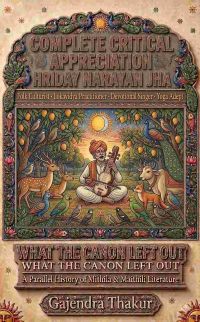
COMPLETE CRITICAL APPRECIATION HRIDAY NARAYAN JHA Folk Culturist Lokavidya Practitioner Devotional Singer Yoga Adept
COMPLETE CRITICAL APPRECIATION
HRIDAY NARAYAN JHA
Folk Culturist · Lokavidya Practitioner · Devotional Singer · Yoga Adept
Indian & Western Literary Theory · Videha Parallel History Framework
Navya-Nyāya Epistemology of Gaṅgeśa · Rasa-Dhvani-Vakrokti-Auchitya
I. BIOGRAPHICAL PROFILE
A. Identity and Institutional Affiliation
Hriday Narayan Jha (हृदय नारायण झा) is a Maithili cultural practitioner, folk musicologist, and devotional artist whose primary institutional affiliation, as documented in the Videha Sadeha 1 archive, is as a B High Grade artist of All India Radio (आकाशवाणीक बी हाइग्रेड कलाकार). The All India Radio (AIR/Akashvani) grading system for artists — which ranks performers as A Top, A, B High, B, and C grades on the basis of auditions assessing technical competence, artistic quality, and cultural significance — places Yadava's B High Grade certification as a mark of substantial professional recognition within the broadcast cultural institution. For a folk and devotional artist working in the Maithili tradition, this grading represents formal institutional validation of a practice that might otherwise remain confined to the living oral tradition.
His second defining qualification, noted in the same archive entry, is the receipt of traditional yoga education (परम्परागत योगक शिक्षा प्राप्त) — not yoga in the modern fitness sense but in the lineage-based disciplinary sense of the classical Indian tradition, suggesting connection to a guru-paramparā (teacher lineage) in the yogic tradition of Mithila. This dual formation — as broadcast folk artist and as practitioner of traditional yoga — marks Hriday Narayan Jha as a figure who inhabits the intersection of the oral-performative and the contemplative-ascetic dimensions of Mithila's cultural life.
His geographic and cultural base is the Madhubani region of Mithila — the heartland of Maithili folk culture, home to the Madhubani painting tradition, the Koshi river culture, and the dense network of Shakta and Shaiva religious sites documented in his essay. His essay's rich knowledge of specific pilgrimage sites — Durgasthan in Madhubani, Bhadrakali in Koilakh, Buḍhī Māī in Mangarauni, Rājarājeśvarī in Ḍokhara, Siddhakāli in Jitvarpur, Parameshvarī in Ṭhāṛhī, and dozens more — reflects intimate local knowledge of sacred geography that belongs to the practitioner rather than to the external observer.
B. Position in the Videha Community
Hriday Narayan Jha appears in the Videha Sadeha 1 (विदेह सदेह १) — the first collected edition of the Videha eJournal, dated 1 January 2009, representing Videha's first two years of publication (2007–2009). His inclusion in this foundational volume, alongside figures such as Gajendra Thakur, Udaya Narayan Singh 'Nachiketa', Ramananand Jha 'Raman', Gangesh Gunjan, Mayanand Mishra, Ravindra Kumar Das, and dozens of other Maithili writers and intellectuals, places him within the core Videha community from its earliest phase.
The Videha Sadeha 1 is not merely a periodical collection but an archival monument — the first digital compilation of the first Maithili internet journal, consciously constructing a parallel literary history outside the Sahitya Akademi mainstream. Hriday Narayan Jha's contribution to this volume — his essay on endangered Maithili folk songs — is thus not a peripheral or occasional contribution but a foundational one: it establishes, from the very beginning of the Videha archive, the journal's commitment to the documentation of the oral-folk-performative dimensions of Maithili culture that the print-canonical tradition has systematically neglected.
The same essay appears in Videha Sadeha 30 (Prelim_30) at pages 1154–1183, confirming that his work was considered significant enough to be included in a subsequent Sadeha collected edition covering material from issues 1–350. This dual appearance — in Sadeha 1 and Sadeha 30 — represents a notable degree of archival longevity within the Videha corpus.
II. WORKS: COMPLETE CATALOGUE AND ANNOTATION
A. Primary Documented Work
'लुप्तप्राय मैथिली लोकगीत' (Luptraprāya Maithilī Lokagīta / Endangered Maithili Folk Songs)
Published in: Videha Sadeha 1 (file 84.doc), January 2009; also archived in Videha Sadeha 30 (Prelim_30, pages 1154–1183). Source: Videha digital archive (ISSN 2229-547X), www.videha.co.in.
This essay is Hriday Narayan Jha's major documented contribution to the Videha archive. It is a substantial work — spanning thirty pages in the Sadeha 30 compilation (pages 1154–1183) — that combines cultural advocacy, musicological documentation, religious-cultural history, and anthological presentation of folk songs. The essay's full title signals its orientation: it is not a celebration of a living tradition but a lament for an endangered one, and its purpose is simultaneously archival (to document what is being lost) and activist (to call for systematic preservation).
B. Structure and Contents of 'Luptraprāya Maithilī Lokagīta'
Opening Thesis: The Urgency of Documentation
The essay opens with a catalogue of endangered folk song genres: पराती (Parātī — dawn hymns), गोसाउनिक गीत (Gosāunik Gīta — household deity invocations), भगवतीगीत (Bhagavatīgīta — Shakti devotional songs), झूमरा (Jhūmarā — ritual invocation songs sung by bhagat communities), सोहर (Sohara — birth songs), खेलउना (Khelaunā — children's play songs), कुमार (Kumāra — youth initiation songs), परिछन (Parichana — threshold welcoming songs), चुमान (Cumāna — ceremonial touching songs), डहकन (Ḍahakana — lamentation songs), विषहारा गीत (Viṣahārā Gīta — snake-deity songs), झूमरि (Jhūmarī), बटगमनी (Baṭagamanī — wayfarer songs), मलार (Malāra — rainy season melodies), चैमासा (Caimāsā — four-month monsoon songs), लगनी (Laganī — wedding processional songs), समदाउन (Samadāuna — farewell lament songs at marriage), and कोशी गीत (Koṣī Gīta — songs of the Koshi river culture).
This inventory is itself a significant scholarly contribution. No single Maithili genre catalogue of this comprehensiveness appears in the mainstream canonical literature. Each genre Jha names corresponds to a specific ritual occasion, seasonal cycle, or life-event within Maithili social life — the total picture is of a song culture so thoroughly embedded in the rhythms of daily, seasonal, and ceremonial life that its disappearance represents not merely an aesthetic loss but a rupture in the social fabric.
The call to action is precise: collect the songs from living practitioners while they still survive; document them in audio-video form (आॅडियो वीडियो रूप मे दस्तावेजीकरण); publish the texts. This three-part programme — collection, audio-visual documentation, publication — anticipates the modern UNESCO framework for intangible cultural heritage (ICH) safeguarding by several years in its practical specificity.
The Puranic Context: Mithila's Sacred Geography
Before presenting the songs, Jha situates Maithili folk culture within the sacred geography of Mithila by citing the Brihad Vishnu Purana's verses on Mithila's sanctity: 'Dhanyāste ye prayatnena nivasanti mahātmune / Vicarenmithilā madhye grāme grāme vicakṣaṇaḥ' (Blessed are those who, O great sage, dwell in Mithila with effort, and wander village to village in Mithila). The citation of Sanskrit puranic authority to establish the cultural credentials of vernacular folk practice is a characteristic move of the Maithili traditional scholarly tradition — it places the folk song within a cosmological framework that validates its significance without subordinating it.
Jha then maps the sacred sites of Mithila — from Durgasthan in Madhubani through Bhadrakali, Buḍhī Māī, Rājarājeśvarī, Siddhakāli, Parameshvarī, Tarā Mandira, Ugrātārā, Caṇḍikā, Kātyāyanī, Kañkālī, Daśamahāvidyā shrines, Vanadurgā, Śyāmāmandira, Tārāsthāna, Cāmuṇḍā, Ahilyāsthāna, Śītalā Sthāna, Pūranadevi, Dakṣiṇakālikā, Tripurasundarī, Sakhleśvarī, Chhinnamasticā, Vairāṭī Devī, and many others — as the devotional context within which the Bhagavati songs and Gosaunik songs he presents emerged and survived.
This topographical inventory of Shakta shrines is itself a scholarly contribution of first importance: it documents the 'Shakti landscape' of Mithila in a systematic way, establishing that the devotional folk song tradition is not a random collection of religious sentiment but a geographically specific tradition rooted in the particular Shakta sacred geography of the Maithili region.
The Nine Songs: Textual Documentation
The heart of the essay presents nine devotional songs (Gosaunik Gīta / Bhagavati Gīta) in nine distinct tunes (नौ धुन), each attributed to a specific composer or marked as traditional (पारंपरिक):
1. Traditional Parātī: 'Prana rahata nahi mora Śyāma binu...' — a Krishnaite dawn hymn attributed to Sahebdas, in the Brajabhasha-influenced Maithili of the folk register, expressing the devotee's longing for the divine beloved.
2. Gosaunik Gīt (Traditional): 'Jay vara jay vara diā he gosāuni he mā tāriṇī tribhuvana devī...' — a Durga invocation in the Jhumra form, with onomatopoeic sound-symbolism ('Kaṭ kaṭ kaṭ maikā danta śabda kaeli') representing the goddess's manifestation.
3. Mahamahopādhyāya Madan Upadhyay: 'Jay jay tāriṇī bhava bhaya hāriṇī durita nivāriṇī vara māle...' — a classical Sanskrit-inflected Maithili hymn to the Tara goddess, in elaborate devotional strophes.
4. Traditional: 'Karu bhava sāgara pāra he jananī...' — a Bhakti surrender song ('Who is my boat, who is my boatman, who will take me across?') invoking the goddess as mother-ferryman.
5. Kālikānta: 'Akhila viśva ke naina tārā ahīṃ chī he jagadamba...' — a devotional song to the cosmic Mother in the Panchamī style, with elaborate nature imagery.
6–7. Traditional invocations of Kali/Jagadamba in the simple folk register ('He jagadamba jagata mātā kālī prathama praṇāma...', 'He ambe mātā hamaro para hoiyau sahāya...').
8. Mahākavi Vidyapati: 'Ādi bhavānī vinaya tua pāya...' — a Vidyapati composition to Bhavani/Kali, establishing the direct lineage from the greatest classical Maithili poet to the living folk tradition.
9. Kaviśvara Canda Jhā: 'Tua binu āja bhavana bhela re ghana vipina samāna...' — a composition by the 19th-century Maithili poet Canda Jhā, in the classical rāga-based form.
The inclusion of both anonymous traditional songs and named compositions by Sahebdas, Madan Upadhyay, Kālikānta, Vidyapati, and Canda Jhā demonstrates the full range of the Maithili devotional song tradition — from high classical (Vidyapati) through 19th-century literary (Canda Jhā) through 20th-century composers (Madan Upadhyay, Kālikānta) to anonymous oral tradition. Jha's essay thus documents not a simple folk tradition but a multi-layered cultural practice that incorporates classical, semi-classical, and purely oral elements within a single living tradition.
The Jhumra Documentation
The essay's second major documentation is of the Jhumra tradition — the ritual invocation songs sung by a bhagat (possessed devotee) community of nine members (नौ सदस्यक समवेत स्वर मे), accompanied by the jhāli (cymbal) and māṃḍara (drum). The bhagat's body becomes the vehicle for the goddess's manifestation (भगतक शरीर मे देवी प्रगट होइत छथि), making the Jhumra not merely a song but a ritual of divine possession and community worship.
Jha's source for the Jhumra song is named: Batahū Yādava, a bhagat who is himself worried about the tradition's survival ('बतहू यादव सन भगत चिन्तित छथि जे हुनक बाद ई परंपरा कोना बाँचत?'). This named testimony — the practitioner's own anxiety about the tradition's continuity — gives the documentation a particular poignancy and specificity. Jha's role as cultural advocate is made explicit: he is the amanuensis for Batahū Yādava's song, the mediating scribe between the oral performance and the written archive.
The Jhumra text presented begins: 'Arahī je vana se maiyā kharahī kaṭaolaiyai he maiyā...' (From the arhar [pigeonpea] forest, the Mother cut the stubble-grass...) — a narrative of the goddess building her dwelling from forest materials, rich in agricultural imagery drawn from the specific ecology of the Mithila Tarai.
III. RASA, DHVANI, VAKROKTI: INDIAN LITERARY THEORY
A. Rasa Analysis
The nine devotional songs Jha documents span multiple rasa-registers. The Krishnaite Parātī ('Prana rahata nahi mora Śyāma binu') embodies Śṛṅgāra-rasa (the erotic-devotional register) in its vipralambha (separation) mode — the devotee's longing for the absent divine beloved is simultaneously erotic and mystical, employing the conventions of Maithili śṛṅgāra poetry established by Vidyapati in the 14th century. The Durga invocations employ Adbhuta-rasa (wonder) in their description of the goddess's manifestation ('Kaṭ kaṭ kaṭ maikā danta śabada kaeli / Gaṭ gaṭ giralani kāṃce' — the crackling sound of the raw skull the goddess devours), and Vīra-rasa (heroic register) in the imagery of battle and destruction of demons. The surrender songs ('Karu bhava sāgara pāra') employ Śānta-rasa (tranquillity) as their dominant register, but with undertones of Karuṇa (pathos) in the devotee's acknowledgment of ignorance and helplessness.
Bharatamuni's Nāṭyaśāstra (2nd century BCE–2nd century CE) establishes rasa as the essential quality of any aesthetic experience, constituted through the interplay of vibhāva (determinants), anubhāva (consequents), and sañcārī bhāva (transient states). In Jha's songs, the vibhāva is the ritual occasion (the gahbar — the sacred enclosure where the goddess is worshipped; the dawn; the wedding threshold); the anubhāva is the physical response (weeping, prostration, the bhagat's possession); and the sañcārī bhāva are the transient states of longing, wonder, surrender, and devotional ecstasy that move through the performance.
B. Dhvani: The Resonance of the Folk Song
Ānandavardhana's Dhvanyāloka (9th century) establishes dhvani (suggestion, resonance) as the soul of poetry — the capacity of language to mean more than its literal content, to evoke a surplus of significance that the literal statement cannot exhaust. In the Gosaunik Gīta, the invocation 'Ke morā naiyā ke mora khevāyā ke morā utārata pāra he jananī' (Who is my boat, who is my boatman, who will take me across, O Mother?) operates at multiple levels simultaneously: literally as a request for the goddess's salvific intervention; symbolically as the metaphor of the ocean of saṃsāra (the world-cycle) and the need for divine grace to cross it; and existentially as the human condition of helplessness before the forces of birth, death, and suffering. The dhvani here is the unstated but resonant sense of the human being's fundamental inadequacy and the necessity of surrender — a meaning the literal statement gestures toward but cannot exhaust.
The Jhumra's imagery of the goddess building her dwelling from forest materials ('Arahī je vana se maiyā kharahī kaṭaolaiyai...') operates with agricultural dhvani: the pigeon-pea forest, the stubble-grass, the bamboo palace are specifics of the Mithila landscape that resonate with the entire agricultural culture of the region — the goddess is not a remote celestial figure but one who inhabits and constructs her dwelling from the same materials that sustain the community's daily life.
C. Vakrokti: Oblique Expression
Kuntaka's Vakroktijīvita (10th century) analyses vakrokti — oblique, indirect, or figural expression — as the essential quality of poetic language. In the Vidyapati devotional song ('Ādi bhavānī vinaya tua pāya / Tua sumirait durata dūra jāya'), vakrokti operates in the compression of the Tantric theology of the goddess into the devotional formula of personal prayer: the complex metaphysical reality of Shakta Tantra — the goddess as the source and destroyer of all phenomena — is expressed obliquely through the simple personal gesture of bowing and requesting grace. The lion-riding, skull-wearing, blood-drinking goddess of Tantric theology becomes, through vakrokti, simply 'Mā' — Mother — whose grace the devotee seeks. This compression of the cosmic into the intimate is vakrokti of the highest order.
D. Auchitya: Propriety and Contextual Fitness
Kshemendra's Auchityavicāracarcā (11th century) establishes auchitya (contextual propriety) as the supreme principle of aesthetic evaluation. Jha's essay as a whole demonstrates auchitya in its structural choices: the puṇyaśloka citations from the Brihad Vishnu Purana establish the cosmic propriety of Mithila's cultural heritage; the topographic inventory of Shakti shrines establishes the geographic propriety of the devotional tradition; and the presentation of songs from multiple compositional registers (classical/Vidyapati, semi-classical/Canda Jhā, 20th-century devotional/Madan Upadhyay, anonymous oral tradition) establishes the historical propriety of the tradition's continuity. Each element is contextually appropriate to the essay's purpose as both cultural document and scholarly advocacy.
IV. NAVYA-NYĀYA EPISTEMOLOGICAL ANALYSIS
A. Śabda-Pramāṇa and the Authority of Folk Song
Gaṅgeśa Upādhyāya's Tattvacintāmaṇi (c. 1325 CE, Mithila) analyses śabda (verbal testimony) as one of the four sources of valid knowledge (pramāṇa). For Gaṅgeśa, verbal testimony is valid when the speaker (vaktā) possesses both the knowledge (jñāna) and the intention to communicate it honestly (tattvajñāna and vivakṣā). In the context of Hriday Narayan Jha's folk song documentation, śabda-pramāṇa operates at multiple levels. First, the songs themselves are instances of śabda-pramāṇa in the theological sense: they are the verbal testimony of the devotional tradition, transmitting knowledge of the goddess's nature and the devotee's proper relationship to her across generations. Second, Jha's documentation — including his named witness Batahū Yādava — is an exercise in śabda-pramāṇa in the scholarly sense: the reliable testimony of a practitioner-observer, whose insider status (as All India Radio folk artist and yoga practitioner) gives his testimony the aptness (āptatā) that Gaṅgeśa requires for valid verbal knowledge.
The crisis Jha documents — the threatened extinction of the folk song tradition — is, in Navya-Nyāya terms, a crisis of śabda-pramāṇa transmission: the unbroken chain of verbal testimony through which the tradition has been transmitted is being broken. When Batahū Yādava asks 'हुनक बाद इ परंपरा कोना बाँचत?' (How will this tradition survive after me?), he is asking precisely the epistemological question: how will the knowledge embedded in the songs be transmitted if the chain of testimony is severed? Jha's archival work is the written substitute for the oral chain — an attempt to preserve the śabda-pramāṇa through inscription when the living transmission is endangered.
B. Pratyakṣa and Anumāna in Folk Song Analysis
Gaṅgeśa's analysis of pratyakṣa (direct perception) as the primary source of valid knowledge is relevant to Jha's position as a practitioner-analyst. His direct perception of the folk song tradition — as a performing artist (AIR B High Grade), as a yoga practitioner connected to traditional lineages, and as a Madhubani-region resident with intimate knowledge of the sacred geography — gives him access to a form of knowledge that external scholars lack. His hearing of the Jhumra from Batahū Yādava is not merely testimonial knowledge (śabda) but participatory perceptual knowledge (parokṣa-pratyakṣa) — the knowledge of one who has been present at the performance, who has heard the jhāli and māṃḍara, who has witnessed the bhagat's possession.
Anumāna (inference) also operates in Jha's essay in the form of the general argument from specific instances: from the observed fact that no young people are learning the traditional Gosaunik Gīt tunes (the hetu — reason), Jha infers the general danger of cultural extinction (the sādhya — the property to be established), via the vyāpti (universal concomitance): 'whenever a tradition's transmission to the younger generation ceases, the tradition dies'. This is a straightforward but important inference — and Jha makes it explicitly, naming the pedagogical failure ('āwak nava pīṛhīk bīc ekara paramparāgata śikṣāk vyavahāra nahi dekhala jāicha') as the cause of the tradition's endangerment.
C. Gaṅgeśa and the Geography of Knowledge
There is a profound geographical and cultural resonance in applying Gaṅgeśa's epistemological framework to Hriday Narayan Jha's work. Gaṅgeśa was born in Karion, Darbhanga district — the same Mithila heartland whose sacred geography Jha maps, whose folk songs he documents, and whose cultural crisis he laments. The Tattvacintāmaṇi was composed in the same culture — the Maithil Brahman intellectual culture of medieval Mithila — that produced Vidyapati, Canda Jhā, and the anonymous composers of the Parātī and Gosaunik Gīt. Jha's documentation of this living folk tradition is thus simultaneously a contribution to the Navya-Nyāya tradition's home culture — an act of knowledge (pramā) within the same epistemological community that Gaṅgeśa theorised.
V. THE VIDEHA PARALLEL HISTORY FRAMEWORK
A. Folk Culture and the Counter-Canon
The Videha Parallel History Framework, as constructed by Gajendra Thakur, insists that the democratic, pluralist, and institutionally independent Maithili tradition is the true living heritage of Mithila — a heritage that the Sahitya Akademi-centred canonical print literature has systematically marginalised. Hriday Narayan Jha's essay is a paradigm case for this framework. The nineteen genres of folk song he identifies — Parātī, Gosaunik Gīt, Sohara, Jhūmarā, Khelauna, Kumāra, Parichana, Cumāna, Ḍahakana, Viṣahārā Gīt, Bataganī, Malāra, Caimāsā, Laganī, Samadāuna, Koṣī Gīt, and others — represent forms of Maithili cultural expression that have no presence in the Sahitya Akademi's award lists, no representation in its canonical anthologies, and no recognition in its institutional structures.
Yet these are the forms that have sustained Maithili cultural identity across generations, that have marked every significant moment of Maithili social life (birth, marriage, death, harvest, monsoon, dawn), and that constitute the living practice of Maithili culture for the vast majority of its speakers. The Sahitya Akademi canon — with its emphasis on print-published novels, poetry collections, and critical essays by educated, urban, upper-caste male authors — represents a tiny fraction of the actual Maithili cultural universe. Jha's essay documents the rest of that universe.
B. Batahū Yādava and the Subaltern Voice
The figure of Batahū Yādava — the bhagat from whom Jha records the Jhumra song, and who voices his anxiety about the tradition's survival — is itself a significant Parallel History moment. Batahū Yādava is a practitioner of a ritual tradition of spirit possession and communal devotional singing; he is unnamed in the canonical literary histories; he is almost certainly from a non-Brahman community (the bhagat tradition of Jhumra performance is associated with specific caste communities of Mithila). His voice — preserved in Jha's essay as a named witness and a documented practitioner — is the kind of subaltern voice that the Parallel History Framework is designed to record and validate.
Gayatri Chakravorty Spivak's question 'Can the subaltern speak?' (1988) is directly relevant here. In the canonical literary history, Batahū Yādava cannot speak — he has no platform, no print publication, no institutional affiliation. In the Videha archive, through Jha's mediation, he does speak — his song is preserved, his name is recorded, his anxiety is documented. The Parallel History's insistence on the value of testimonial, oral, and performative cultural expression over the hegemony of print gives Batahū Yādava a form of textual existence that the canonical tradition denies him.
C. Vidyapati's Continuity
One of the most significant structural features of Jha's essay is the inclusion of a Vidyapati composition ('Ādi bhavānī vinaya tua pāya...') within the collection of living folk songs alongside anonymous traditional songs and 20th-century compositions. This inclusion asserts a continuity between the 14th-century classical tradition and the contemporary folk tradition — a continuity that the canonical literary history severs by treating Vidyapati as a classical-literary figure whose work belongs to the Sanskrit-influenced high tradition rather than to the living oral culture.
The Videha Parallel History Framework consistently insists on the continuity between the Adi Kavi (Pre-Jyotirishwar Vidyapati), Vidyapati Thakkurah (1350–1435), and the democratic oral tradition that has transmitted their legacy. Jha's essay performs this continuity in practice: the Vidyapati devotional song lives alongside the anonymous Jhumra in the same community of practice, sung by the same performers, in the same ritual contexts. The canon's separation of 'literary Vidyapati' from 'folk Vidyapati' is a scholarly fiction that the living tradition repudiates.
VI. WESTERN CRITICAL AND ETHNOMUSICOLOGICAL FRAMEWORKS
A. Walter Benjamin: The Oral Tradition and Its Endangerment
Walter Benjamin's essay 'The Storyteller' (1936) analyses the decline of oral storytelling in the face of modernity — the print novel, mass media, and the disruption of craft-based communal life. Benjamin argues that the oral tradition transmits not merely information but 'experience' (Erfahrung) in the full sense — accumulated wisdom embedded in narrative, connected to the rhythms of community life. The threat to the Maithili folk song that Jha documents is precisely Benjamin's story: the traditional practitioner community is losing its transmission mechanism, not because the tradition lacks value but because the conditions of modernity (urbanisation, migration, mass media, the declining economic viability of traditional community life) have disrupted the social infrastructure that sustained it. Jha's documentation project is a Benjaminian response: an attempt to preserve the content of the tradition even when the experiential conditions that generated it can no longer be maintained.
B. Bruno Nettl: Ethnomusicology and Cultural Change
Bruno Nettl's work on ethnomusicology and cultural change — particularly The Study of Ethnomusicology (1983) and Heartland Excursions (1995) — provides a framework for understanding the specific dynamics of Jha's documentation project. Nettl distinguishes between 'maintenance' (the preservation of a tradition in its original form), 'gradual change' (the adaptation of a tradition to new circumstances), and 'abandonment' (the loss of a tradition). Jha's essay is concerned precisely with the distinction between gradual change and abandonment: he notes that Bhagavati songs are now being sung to filmi (Bollywood) tunes rather than traditional ones ('filmī gītaka dhuna me bhagavatī gīta sabhak calana') — a form of gradual change that may ultimately lead to abandonment, since the specific melodic identities (dhuna) of the traditional songs are as much part of the tradition as the texts.
Nettl's concept of the 'musical canon' — the set of works regarded as exemplary within a tradition — is relevant to Jha's multi-register presentation. By including Vidyapati, Canda Jhā, Madan Upadhyay, Kālikānta, Sahebdas, and anonymous traditional songs side by side, Jha implicitly proposes a folk-devotional canon that is more inclusive and more representative of the actual practice of Maithili musical culture than the print-literary canon.
C. Gramsci: Folklore and Hegemony
Antonio Gramsci's analysis of folklore (Prison Notebooks, 1929–1935) argues that folk culture — including folk song, folk belief, and popular tradition — represents 'a conception of the world and of life, implicit in the main, of certain strata of society in opposition to, or different from, those of the leading groups' (PN, III, 2311). For Gramsci, folklore is not a pre-modern survival but a form of subaltern cultural resistance — the expression of the worldview of those who do not control the dominant institutions.
Jha's folk songs — particularly the Jhumra tradition associated with non-Brahmin bhagat communities and the anonymous communal songs of the agricultural calendar — are Gramscian folklore in this precise sense: they express a cosmology, a social ethic, and a relationship to the sacred that is distinct from (and often at odds with) the Brahminical Sanskrit-scriptural tradition that the Maithili canonical establishment has privileged. The goddess who 'builds her palace from forest materials' is not the goddess of the Puranic high tradition but the goddess of the Mithila peasant's agricultural universe.
D. UNESCO Intangible Cultural Heritage Framework
Jha's documentation programme — collect, audio-visually document, publish — directly anticipates the UNESCO Convention for the Safeguarding of the Intangible Cultural Heritage (2003), which defines ICH as including 'oral traditions and expressions, including language as a vehicle of the intangible cultural heritage; performing arts; social practices, rituals and festive events; knowledge and practices concerning nature and the universe; traditional craftsmanship'. The Maithili folk songs Jha documents fall squarely within all five of these categories simultaneously: they are oral expressions, performing arts, social practices/rituals, and knowledge about nature and the universe (the agricultural calendar, the Koshi river ecology, the Shakta sacred geography of Mithila).
The UNESCO framework requires 'communities, groups and, in some cases, individuals' to be recognized as bearers of ICH. Jha's naming of Batahū Yādava as a community bearer, and his own role as AIR B High Grade folk artist, are precisely the kinds of 'bearer community' recognition that the UNESCO framework mandates. His essay is, avant la lettre, an ICH safeguarding document.
VII. CRITICAL SYNTHESIS: SIGNIFICANCE AND LEGACY
Hriday Narayan Jha's contribution to the Videha archive, while constituting a single major essay, is of disproportionate significance within the Parallel History Framework. Several dimensions of this significance deserve emphasis.
First, the essay's taxonomic contribution. The nineteen genres of Maithili folk song that Jha identifies and names — Parātī, Gosaunik Gīt, Bhagavatī Gīt, Jhūmarā, Sohara, Khelauna, Kumāra, Parichana, Cumāna, Ḍahakana, Viṣahārā Gīt, Jhūmarī, Baṭagamanī, Malāra, Caimāsā, Laganī, Samadāuna, Koṣī Gīt, and others — constitute the most comprehensive genre catalogue of Maithili folk songs in the Videha archive. No equivalent taxonomy exists in the canonical Maithili literary scholarship.
Second, the essay's archival contribution. The nine devotional songs presented — in nine distinct tunes, from five different composers/traditions — constitute a primary-source anthology of Maithili Gosaunik and Bhagavatī Gīt that preserves texts and compositional attributions that would otherwise be lost. The Jhumra text from Batahū Yādava is, as far as can be determined from the Videha archive, a unique transcription of an oral performance.
Third, the essay's advocacy contribution. Jha's explicit call for audio-visual documentation and publication of endangered folk songs was, at the time of its 2009 Videha publication, ahead of mainstream institutional practice in India. The subsequent expansion of UNESCO's ICH safeguarding framework and the Indian government's documentation programmes has vindicated his approach.
Fourth, the essay's theoretical contribution. Jha's implicit argument — that the Maithili folk song tradition constitutes a coherent cultural system encompassing agricultural, seasonal, ritualistic, devotional, and cosmological knowledge — anticipates the ethnomusicological and cultural studies approaches that have since gained ground in South Asian studies. His multi-register anthology (classical/Vidyapati, literary/Canda Jhā, devotional/Madan Upadhyay, oral/traditional) implicitly proposes a continuity theory of Maithili musical culture that is more sophisticated than the canonical separation of 'classical' from 'folk'.
VIII. SELECT BIBLIOGRAPHY
Primary Sources: Works of Hriday Narayan Jha
Jha, Hriday Narayan. 'Luptraprāya Maithilī Lokagīta' (लुप्तप्राय मैथिली लोकगीत). In Videha Sadeha 1, file 84.doc, January 2009. ISSN 2229-547X VIDEHA. www.videha.co.in.
Jha, Hriday Narayan. 'Luptraprāya Maithilī Lokagīta'. In Videha Sadeha 30 (Prelim_30), pp. 1154–1183. ISSN 2229-547X VIDEHA. www.videha.co.in.
Videha Sources
Thakur, Gajendra (ed.). Videha Sadeha 1 (विदेह सदेह १). First collected edition, 1 January 2009. ISSN 2229-547X. www.videha.co.in.
Thakur, Gajendra (ed.). Videha Sadeha 30 (Prelim_30). Collected from issues 1–350. ISSN 2229-547X. www.videha.co.in.
Thakur, Gajendra. A Parallel History of Mithila and Maithili Literature. www.videha.co.in/gajenthakur.htm.
Indian Literary Theory
Bharatamuni. Nāṭyaśāstra. Tr. M. Ghosh. Calcutta: Asiatic Society, 1951–61.
Ānandavardhana. Dhvanyāloka. Tr. K. Krishnamoorthy. Dharwar: KU, 1974.
Kuntaka. Vakroktijīvita. Ed. and Tr. K. Krishnamoorthy. Dharwar: KU, 1977.
Kshemendra. Auchityavicāracarcā. Tr. R. Gnoli. Rome: ISMEO, 1956.
Gaṅgeśa Upādhyāya. Tattvacintāmaṇi. Tr. S.H. Phillips & N.S.R. Tatacharya. Hackett, 2004.
Western Theory and Ethnomusicology
Benjamin, Walter. 'The Storyteller'. In Illuminations. Tr. H. Zohn. New York: Schocken, 1969.
Gramsci, Antonio. Prison Notebooks (selections). Tr. Q. Hoare and G.N. Smith. London: Lawrence & Wishart, 1971.
Nettl, Bruno. The Study of Ethnomusicology. Urbana: University of Illinois Press, 1983.
Spivak, Gayatri C. 'Can the Subaltern Speak?' In Marxism and the Interpretation of Culture. Ed. Cary Nelson and Lawrence Grossberg. Urbana: UIUC, 1988.
UNESCO. Convention for the Safeguarding of the Intangible Cultural Heritage. Paris: UNESCO, 2003.
FOLK SONG ANALYSIS
HRIDAY NARAYAN JHA
हृदय नारायण झा
लुप्तप्राय मैथिली लोकगीत: Close Reading and Cultural Analysis
Indian & Western Literary Theory · Videha Parallel History Framework
Navya-Nyāya Epistemology of Gaṅgeśa · Rasa-Dhvani-Vakrokti-Auchitya
I. 'LUPTRAPRĀYA MAITHILĪ LOKAGĪTA' AS LITERARY-CULTURAL FORM
A. The Endangered Archive Essay
Hriday Narayan Jha's 'Luptraprāya Maithilī Lokagīta' (लुप्तप्राय मैथिली लोकगीत — Endangered Maithili Folk Songs) belongs to a distinct genre of Maithili cultural writing that one might call the 'endangered archive essay' — a form that combines cultural advocacy, ethnographic documentation, textual anthology, and scholarly argument in a single discursive structure. This genre, while not formally named in Maithili literary criticism, has precedents in the documentation work of earlier Maithili cultural historians, but Jha's essay is distinguished by its combination of generic breadth, topographic specificity, and named-practitioner testimony.
The essay's discursive structure moves through four phases: (1) the taxonomic — listing the genres at risk; (2) the contextual — establishing Mithila's sacred geography and puranic authority; (3) the anthological — presenting representative songs from multiple traditions; and (4) the archival-advocacy — naming endangered practitioners and calling for systematic documentation. Each phase performs a distinct rhetorical function, but all four are unified by the essay's central argument: that the loss of these songs is not merely a cultural loss but an epistemological one — the erasure of forms of knowledge (about agricultural seasons, ritual practice, divine cosmology, and community ethics) that are encoded nowhere else.
B. Intertextuality: The Essay and Its Sources
The essay operates across three distinct registers of Maithili cultural authority. The first is Puranic: the Brihad Vishnu Purana's Sanskrit verses on Mithila establish the cosmic-religious framework within which the folk songs are situated. The second is classical literary: Vidyapati's devotional composition ('Ādi bhavānī') and Kaviśvara Canda Jhā's song ('Tua binu āja bhavana bhela re') are cited as representative of the classical-literary tradition's continuity with the folk. The third is oral-communal: the anonymous Parātī ('Prana rahata nahi mora'), the traditional Gosaunik Gīta, and the Jhumra from Batahū Yādava represent the living oral tradition. This three-register intertextuality — Puranic, classical-literary, oral-communal — is a characteristic feature of Maithili cultural scholarship in the tradition that Jha represents: the refusal to separate the sacred, the literary, and the popular.
C. Prose Style
Jha's prose style in this essay is that of the educated Maithili cultural insider writing for a community audience rather than for an academic journal. The sentences are relatively short and direct; the vocabulary blends Sanskrit-derived terms (paramparā, dastāvejīkaraṇa, saṃskāra) with colloquial Maithili; and the rhetorical mode is primarily descriptive and exhortatory rather than argumentative. This is entirely appropriate to the essay's purpose: it is addressed to the Videha readership — a community of Maithili cultural practitioners and enthusiasts — rather than to a specialist scholarly audience. The essay's effectiveness as advocacy depends on its accessibility and on the directness of its emotional appeal to the reader's sense of cultural loss.
II. THE GENRE TAXONOMY: A SYSTEMATIC ANALYSIS
A. Life-Cycle Songs
The life-cycle songs documented by Jha — Sohara (birth songs), Khelauna (children's play songs), Kumāra (youth songs), Parichana (threshold welcoming songs), Cumāna (ceremonial touching songs), and Laganī (wedding processional songs) — constitute a complete set of ritual accompaniments to the transitions of Maithili social life from birth to marriage. Each genre is functionally specific: the Sohara celebrates and sanctifies the birth; the Khelauna accompanies children's early socialisation; the Kumāra marks the transition from childhood to youth; the Parichana and Cumāna accompany the ceremonial arrival of the bride at the threshold of her new home; and the Laganī accompanies the wedding procession itself.
The loss of these genres is not merely the loss of songs but the loss of the ritual occasions that gave them meaning. When the Sohara is no longer sung at a birth, the birth is no longer ritually framed within the Maithili cosmological tradition; when the Laganī is replaced by a film song at a wedding procession, the wedding procession is no longer a moment in the specifically Maithili ritual tradition but a generic modern event. Jha's anxiety about these losses is therefore an anxiety about the dissolution of Maithili social-ritual identity.
B. Agricultural and Seasonal Songs
The seasonal songs — Malāra (monsoon-onset melodies), Caimāsā (four-month monsoon cycle songs), Samadāuna (farewell lament associated with the monsoon season and with daughters' departures), and Koṣī Gīta (songs of the Koshi river culture) — encode agricultural and ecological knowledge in musical form. The Malāra (from the Sanskrit malāra/malhāra rāga) is associated with the onset of the monsoon, its melody evoking the specific emotional quality of the pre-monsoon and monsoon atmosphere — the relief of rain after summer heat, the anxiety about floods, the beauty of dark clouds over the paddy fields. The Caimāsā covers the four-month period of monsoon (āṣāḍha through āśvina) during which the agricultural year is most intensive.
The Koṣī Gīta is perhaps the most culturally specific of Jha's genres. The Koshi river — known historically as the 'Sorrow of Bihar' for its catastrophic floods — has a distinct culture, ecology, and mythology that has generated its own musical tradition. Songs associated specifically with the Koshi, its floods, its fish, its ecological rhythms, and its mythological identity (the Koshi as the daughter of Shiva in some traditions) constitute a distinctive sub-tradition within Maithili folk music that is doubly endangered: by the general decline of folk music practice and by the physical transformation of the Koshi's ecology through embankment and river management.
C. Ritual Invocation Songs
The ritual invocation songs — Parātī (dawn hymns), Gosaunik Gīta/Bhagavatī Gīta (household deity invocations), Jhūmarā (possessed-devotee invocations), Viṣahārā Gīta (snake-deity songs), Jhūmarī, and Baṭagamanī — form the most sacred and most endangered cluster within Jha's taxonomy. These are not merely aesthetic performances but functional rituals: the Parātī is sung at dawn to wake the household and begin the day under divine protection; the Gosaunik Gīta invokes the household goddess at the beginning of any auspicious activity; the Jhūmarā is the vehicle through which the bhagat community channels the goddess's presence into the community's ritual space.
The Viṣahārā Gīta — songs addressed to the snake-goddess Viṣahārī (Mansa/Manasā in Bengal) — constitutes a tradition closely connected to the agricultural year and the threat of snakebite during the monsoon. The Mansa tradition in eastern India has generated an entire literary genre (the Maṅgalakāvya — auspicious narrative poems), of which the Maithili Viṣahārā Gīta is the oral-performative equivalent. The near-disappearance of these songs is connected to the decline of both the agricultural lifestyle that made snakebite a constant threat and the shamanic-folk-religious practice that addressed that threat through ritual song.
III. THE NINE GOSAUNIK SONGS: CLOSE READING
A. Song 1: Parātī — 'Ajahuṃ bhajana cita ceta mugudha mana'
अजहुँ भजन चित चेत मुगुध मन अजहु भजन चित चेत ।।
बालापन तरूणापन बीतल, केस भये सभ सेत मुगुध मन ।।
जा मुख राम नाम ने आबत, मानहु सो जन प्रेत मुगुध मन ।।
साहेबदास तोहि क्या लागत, राम नाम मुख लेत मुगुध मन ।।
Attributed to Sahebdas. This Parātī is composed in the Brajabhasha-Maithili mixed register characteristic of medieval devotional composition in the Mithila region. The refrain 'mugudha mana' (O deluded/bewildered mind) establishes the Bhakti tradition's characteristic rhetorical address — the poet speaking to his own mind as if to an errant pupil.
Rasa: Śānta-rasa (tranquillity born of spiritual insight) is the dominant rasa, but it is arrived at through the recognition of previous spiritual failure — the three middle verses catalogue the stages of a life wasted without bhajana (devotional practice): childhood (bālapana), youth (taruṇāpana), and the final stage signalled by whitened hair (kesa bhaye sabha seta). This temporal movement — from youth through age to death (the one who does not take Ram's name is likened to a preta, a ghost/corpse) — generates Karuṇa-rasa (pathos) as a sañcārī (transient emotion) before resolution in the śānta of the final verse's gentle self-admonishment.
Dhvani: The dawn performance context of the Parātī creates a dhvani of renewal and urgency: the song is sung at the threshold of a new day, and its message — 'even now, wake up' (ajahuṃ) — resonates with the literal awakening of the physical body and household as a metaphor for the spiritual awakening the song advocates. The sunrise (which the Parātī accompanies) is the unstated but resonant symbol.
Navya-Nyāya: The song's logic is an anumāna (inference): the hetu (reason) is 'childhood and youth have passed, the hair has whitened'; the sādhya (property to be established) is 'the time for spiritual practice is now urgently required'; the vyāpti (universal concomitance) is 'those who do not take Ram's name before death become ghosts'. The song's emotional power derives precisely from this inferential structure: the inference is so clear, so universally acknowledged, and yet so universally ignored.
B. Song 2: Traditional Gosaunik Gīta — Durga Invocation
जय वर जय वर दिअ हे गोसाउनि हे मा तारिणी त्रिभुवन देवी ।
सिंह चढल मैया फिरथि गोसाउनि हे मा अतिबल भगवती चण्डी ।।
कट कट कट मैया दन्त शबद कएलि हे मा गट गट गिरलनि काँचे ।
घट घट घट मैया शोणित पिबलनि हे मा मातलि योगिन संगे ।।
This anonymous traditional Gosaunik Gīt invokes Durgā/Caṇḍī in her most ferocious Tantric form. The onomatopoeia of the third verse — 'Kaṭa kaṭa kaṭa maikā danta śabada kaeli / Gaṭa gaṭa giralani kāṃce / Ghaṭa ghaṭa ghaṭa maikā śoṇita pibalani' (Ka-ka-ka the Mother made the sound of gnashing teeth / gulp-gulp she swallowed them raw / gulp-gulp-gulp the Mother drank the blood) — is among the most striking sound-figures in Maithili folk poetry.
This is vakrokti of the sonic register: the onomatopoeic syllables 'kaṭa kaṭa kaṭa', 'gaṭa gaṭa', and 'ghaṭa ghaṭa ghaṭa' are not merely descriptive but performative — they enact in sound the visceral reality of the goddess's consuming power, making the auditor's body feel the violence they describe. This is the folk tradition's mastery of the resources of Tantric śabda-brahman — language as embodied power, not merely referential sign.
Rasa: Adbhuta (wonder) and Bhayānaka (terror) in complex interplay — the goddess is simultaneously terrifying (blood-drinking, demon-eating) and benevolent (tāriṇī — the one who delivers/ferries across). This dual rasa-structure reflects the Tantric theology of the goddess as both destroyer and sustainer, a theology that the simple folk song encodes more directly and more powerfully than many a learned Tantric text.
C. Song 3: Mahāmahopādhyāya Madan Upadhyay — Hymn to Tārā
जय जय तारिणी भव भय हारिणी दुरित निवारिणी वर माले ।
परम स्वरूपिणी उग्र विभूषिणी दनुज विदूषिणी अहिमाले ।।
This composition by Mahāmahopādhyāya Madan Upadhyay is in the highly Sanskritised register of learned devotional poetry. The cascade of compound epithets — tāriṇī (deliverer), bhavabhayahāriṇī (remover of the fear of worldly existence), duritanivāriṇī (remover of sin), ugravibhūṣiṇī (adorned with fierce ornaments), danujvidūṣiṇī (destroyer of demons) — follows the Sanskrit alaṃkāra tradition of multiple-attribute invocation. Yet it is sung in the same devotional community context as the anonymous folk songs, demonstrating the multi-register character of Maithili devotional culture.
The title Mahāmahopādhyāya (the highest traditional scholarly title in the Sanskrit pandit system) signals that Madan Upadhyay was a figure of the traditional learned class — yet his compositions entered the folk tradition and were transmitted through communal oral performance alongside anonymous songs. This dissolution of the boundary between 'learned' and 'folk' within the devotional context is a feature that the Videha Parallel History Framework consistently underscores as characteristic of the democratic Maithili cultural tradition.
D. Songs 4–7: Traditional Surrender Songs
करू भव सागर पार हे जननी करू भवसागर पार ।
के मोरा नैया के मोर खेबैया के मोरा उतारत पार हे जननी ।।
अहीं मोर नैया अहीं मोर खेबइया अहीं उतारब पार हे जननी ।।
These four traditional invocations (songs 4–7) share the mode of absolute surrender and the rhetoric of helplessness — 'I do not know prayer, I do not know worship, I only know how to sing incoherent songs' (nahi jānī hama pūjā japa tapa / aṭapaṭa gīta gabai chī he); 'I am a fool from birth to birth' (janama janama sāṃo murūkha banala chī). This rhetoric of the devotee's profound inadequacy — combining Bhakti's characteristic self-deprecation with the maternal address to the goddess as the one who accepts even the incoherent song of the fool — constitutes a specific Maithili vernacular Bhakti theology.
Auchitya analysis: The contextual propriety of these songs is inseparable from their performance occasion. Sung in the gahbar (the sacred enclosure) during the night-long worship, in the presence of the goddess's image, by a community of worshippers who may include the most and least educated members of the village, the rhetoric of universal inadequacy ('I do not know' — 'hama ta kichu ne janai chī') creates communal solidarity: it is a theology of levelling, in which scholarly knowledge and folk practice are equally inadequate before the divine, and only sincere devotion (bhāva) matters.
E. Song 8: Vidyapati — 'Ādi bhavānī vinaya tua pāya'
आदि भवानी विनय तुअ पाय, तुअ सुमिरइत दुरत दूर जाय ।।
सिंह चढ़ल देवि देल परवेश बघछाल पहिरन जोगिन भेष ।।
बाम लेल खपर दहिन लेल काति, असुर के बधए चललि निशि राति ।।
तुअ भल छाज देवि मुण्डहार, नूपूर शबद करए छनकार ।।
भनई विद्यापति कालीकेलि सदा ए रहू मैया दहिन भेलि ।।
This Vidyapati composition — identified by the signature verse 'Bhanai Vidyapati Kālikeli' — is one of his devotional songs to Kali/Bhavani rather than to Krishna, demonstrating the full range of Vidyapati's devotional output. The goddess here is described in her Tantric iconography with precise ritual accuracy: lion-mount (siṃha caḍhala), tiger-skin garment (bagachāla pahirana), yoginī form, skull-cup in the left hand (bāma lela khapara), sword in the right (dahina lela kāti), decapitated demon-heads as garland (muṇḍahāra), anklet-bells (nūpura śabada).
The inclusion of this Vidyapati composition by Jha — within a collection of folk songs addressed to the Maithili cultural community — asserts the unbroken continuity of Maithili devotional culture from the 14th century to the 21st. Vidyapati's song did not remain in scholarly editions; it entered the folk singing tradition and has been transmitted through oral performance in the same gahbar-worship context as the anonymous traditional songs alongside which Jha presents it. This is the Parallel History's living demonstration: the 'classical' and the 'folk' are not separate traditions but a single continuous practice.
F. Song 9: Kaviśvara Canda Jhā — 'Tua binu āja bhavana bhela re'
तुअ बिनु आज भवन भेल रे घन विपिन समान ।।
जनु रिधि सिधिक गरूअ गेल रे मन होइछ भान ।।
परमेश्वरी महिमा तुअ रे जग के नहि जान ।
मोर अपराध छेमब सब रे नहि याचब आन ।।
जगत जननी काँ जग कह रे जन जानकि नाम ।
नहर नेह नियत नित रे रह मिथिला धाम ।।
This composition by Kaviśvara Canda Jhā (1844–1907) — the great 19th-century Maithili poet best known for his epic Rāmāyaṇa — is in a more personal, elegiac register than the formal Puranic invocations. The first verse's image of the house becoming like a 'dense forest' (ghana vipina) in the goddess's absence is a striking vakrokti: the domesticity of the 'bhavana' (home/household shrine) transformed into the wildness of the forest signals the dissolution of civilised order in the absence of the divine. The last verse's identification of 'Jānakī' (Sita, born in Mithila) with the goddess ('Jagat jananī kāṃ jaga kaha re / Jana jānaki nāma') is a specifically Mithila theological move: the connection between Sita and the Shakti goddess tradition, between Mithila's most famous daughter and the cosmic Mother, collapses the distance between myth and the local, making the divine specifically Maithili.
IV. THE JHUMRA TRADITION: RITUAL PERFORMANCE ANALYSIS
A. The Bhagat Community and Possession Ritual
The Jhumra performance tradition described by Jha — nine-member singing group, cymbal and drum accompaniment, the bhagat's body as the vessel of divine manifestation — belongs to the category of ritual possession performance that anthropologists, following Victor Turner's work on ritual structure and liminality ('The Ritual Process', 1969), identify as 'liminal' practice: performance at the threshold between the ordinary social world and the sacred, in which the normal social categories (caste, gender, age) are temporarily suspended or inverted to allow the divine presence to manifest.
Turner's analysis of 'communitas' — the temporary dissolution of social hierarchy in ritual performance, creating a direct horizontal bond among participants — is directly applicable to the Jhumra. In the gahbar, the bhagat (often from a non-Brahmin community) becomes the vessel of the goddess and thus the ritual authority of the occasion, inverting the normal social hierarchy in which the Brahmin priest controls religious ritual. This ritual inversion is encoded in the social practice of the tradition, and its threatened disappearance represents not merely a loss of musical form but a loss of the socially equalising ritual space that the Jhumra creates.
B. The Jhumra Song: Ecological Imagery
अरही जे वन से मइया खरही कटओलियइ हे मइया खरही कटओलियइ हे ।
मइया जी हे बिजुबन कटओलियइ बिट बाँस जगदम्बा रचि रचि महल बनओलियई हे ।।
गोड़लागूँ पैयाँ पड़ूँ मइया जगदम्बा आइ मइया गहबर अबियउ हे ।
मइया जी हे राखि लिअउ भगत केर लाज जगदम्बा कलजोरि पैयाँ पड़इ छी हे ।।
The Jhumra text presents the goddess in her most intimately ecological form: she is not the cosmic destroyer of the Sanskrit Puranas but a being who lives in and is built from the specific landscape of Mithila. The arhar (pigeonpea) forest, the kharahi (stubble-grass), the bijuban (lightning-struck forest), the bāṃsa (bamboo) — these are the specific agricultural and ecological materials of the Mithila Tarai, and from them the goddess constructs her dwelling. The 'mahala' (palace) built from bamboo and stubble-grass is a folk-ecological palace, built from the same materials that the Mithila farmer uses to construct his own dwelling.
This ecological grounding of the divine is the folk tradition's most profound theological contribution: it refuses the transcendence of the Puranic cosmos and insists on the divine's immanence in the specific place, ecology, and agriculture of Mithila. The goddess does not reside in a celestial realm but in the arhar forest that borders the field, in the bamboo grove beside the tank, in the gahbar built of the same materials as the farmer's threshing floor.
Koṣī Gīt context: The ecological specificity of the Jhumra is continuous with the Koṣī Gīta tradition — the songs of the Koshi river culture — that Jha mentions in his opening genre catalogue. Both traditions encode the specific landscape of the Mithila Tarai as the primary site of the divine's presence, and both are endangered by the same forces: urbanisation, agricultural change, and the replacement of ecological knowledge by abstracted religious practice disconnected from the specific landscape.
V. INTEGRATED THEORETICAL ASSESSMENT
A. The Semiotic Structure of the Folk Song
Roland Barthes' distinction between 'denotation' and 'connotation' (Mythologies, 1957; Elements of Semiology, 1964) is useful for analysing the structural complexity of the songs Jha documents. At the denotative level, the songs are requests for the goddess's intervention in specific circumstances (deliverance from worldly suffering, blessing of the household, protection from demons). At the connotative level, they encode complex theological, cosmological, and social meanings: the four-level cosmology of the Puranas, the Tantric theology of the goddess as both destroyer and sustainer, the Bhakti tradition's levelling of social hierarchy through devotional surrender, and the specifically Maithili ecological theology that grounds the divine in the landscape.
The Jhumra adds a third level: the performative. At this level, the song is not merely a sign (denotation) or a signifier of cultural meaning (connotation) but an act — it brings the goddess into presence, it makes the ritual space a site of divine manifestation, it transforms the bhagat's body into the goddess's vehicle. This performative dimension, which the written text can document but cannot replicate, is precisely what Jha's essay mourns: the endangered element is not merely the text but the performance event.
B. Memory, Place, and Endangered Cultural Heritage
Maurice Halbwachs' theory of 'collective memory' (La Mémoire collective, 1950) argues that memory is not an individual psychological phenomenon but a social practice sustained by the community's ongoing engagement with shared places, objects, and rituals. The folk songs Jha documents are precisely this kind of collective memory: the Gosaunik Gīt 'remembers' the household goddess in each performance; the Parātī 'remembers' the devotional dawn practice; the Koṣī Gīta 'remembers' the ecological and mythological character of the Koshi river. When the songs are no longer performed, the collective memories they sustain are not merely forgotten but actively dismembered — the community loses its capacity to access and transmit the cultural knowledge encoded in them.
Edward Casey's phenomenological analysis of place ('Getting Back into Place', 1993) complements Halbwachs: sacred songs are not merely associated with specific places (the gahbar, the threshold, the dawn household) but constitute those places as meaningful — they make the gahbar a site of divine presence, the dawn a time of spiritual renewal, the Koshi riverbank a place of ecological and mythological significance. When the songs cease, the places themselves lose their cultural and spiritual charge, becoming merely physical locations rather than sites of meaning.
VI. SELECT BIBLIOGRAPHY
Primary Sources
Jha, Hriday Narayan. 'Luptraprāya Maithilī Lokagīta.' Videha Sadeha 1, file 84.doc, January 2009 (also Sadeha 30, pp. 1154–1183). ISSN 2229-547X. www.videha.co.in.
Indian Literary Theory
Bharatamuni. Nāṭyaśāstra. Tr. Ghosh. Calcutta: Asiatic Society, 1951.
Ānandavardhana. Dhvanyāloka. Tr. Krishnamoorthy. Dharwar, 1974.
Kuntaka. Vakroktijīvita. Ed. Krishnamoorthy. Dharwar, 1977.
Kshemendra. Auchityavicāracarcā. Tr. Gnoli. Rome, 1956.
Gaṅgeśa Upādhyāya. Tattvacintāmaṇi. Tr. Phillips & Tatacharya. Hackett, 2004.
Western Theory
Barthes, Roland. Mythologies. Tr. A. Lavers. London: Cape, 1972.
Casey, Edward. Getting Back into Place. Bloomington: Indiana UP, 1993.
Halbwachs, Maurice. On Collective Memory. Tr. L. Coser. Chicago: UCP, 1992.
Turner, Victor. The Ritual Process. Chicago: Aldine, 1969.
Nettl, Bruno. The Study of Ethnomusicology. Urbana: UIUC, 1983.
Spivak, Gayatri C. 'Can the Subaltern Speak?' In Marxism and the Interpretation of Culture. Ed. Nelson & Grossberg. UIUC, 1988.
A PARALLEL HISTORY OF MAITHILI LITERATURE
ANNOTATED FOLK SONG ANTHOLOGY
HRIDAY NARAYAN JHA
हृदय नारायण झा
लुप्तप्राय मैथिली लोकगीत — Annotated Bilingual Anthology
Indian & Western Literary Theory · Videha Parallel History Framework
Navya-Nyāya Epistemology of Gaṅgeśa · Rasa-Dhvani-Vakrokti-Auchitya
EDITORIAL INTRODUCTION
This volume presents the complete folk song anthology from Hriday Narayan Jha's essay 'Luptraprāya Maithilī Lokagīta' (Endangered Maithili Folk Songs), first published in Videha Sadeha 1 (January 2009) and archived in Videha Sadeha 30 (pp. 1154–1183). The songs are presented in their original Maithili/Maithili-Braj text, with English translations and critical annotations that situate each song within the Maithili literary tradition, the Tantric-Bhakti devotional context, and the Videha Parallel History Framework.
The anthology presents ten texts: nine devotional songs (Gosaunik Gīta / Bhagavatī Gīta) in nine distinct tunes (as documented by Jha), plus the Jhumra ritual invocation song from Batahū Yādava. The songs are arranged in the order Jha presents them. Each entry includes: the original Maithili/Braj text; an English translation (literary rather than literal); the attribution; and critical annotations covering rasa, dhvani, musical form, and cultural context.
A note on language and script: The songs use a range of registers from Brajabhasha-influenced Maithili (Parātī, traditional songs), through classical Maithili (Canda Jhā, Vidyapati), to highly Sanskritised devotional Maithili (Madan Upadhyay), to colloquial folk Maithili (Jhumra). This multi-register character is one of the tradition's defining features and is preserved in the original texts.
I. THE NINE GOSAUNIK GĪTA (गोसाउनिक गीत)
The Gosaunik Gīta (songs of the household deity, gosāunī) are invocations sung at the beginning of any auspicious activity in a Maithili household — a wedding, a birth ceremony, a religious observance, or the inauguration of a new season's work. They are addressed primarily to the Shakti goddess in her forms as Bhavani, Durga, Kali, Tara, and the local village deity. Hriday Narayan Jha documents nine such songs in nine distinct melodic forms (dhuna), ranging from the classical Braj Parātī to original compositions by Vidyapati and Canda Jhā. Each has its own melodic identity, its own ritual context, and its own theological register.
Song 1: Parātī — Dawn Hymn
Composer: Sahebdas (traditional attribution) | Rāga/Dhuna: Parātī form | Occasion: Dawn awakening ritual, household beginning-of-day
Language: Brajabhasha-Maithili mixed register
MAITHILI TEXT:
अजहुँ भजन चित चेत मुगुध मन अजहु भजन चित चेत ।।
बालापन तरूणापन बीतल , केस भये सभ सेत मुगुध मन । अजहुँ ।।
जा मुख राम नाम ने आबत , मानहु सो जन प्रेत मुगुध मन । अजहुँ ।।
हरि विमुखी सुख लहत न कबहुँ , परए नरक के रेत मुगुध मन । अजहुँ ।।
साहेबदास तोहि क्या लागत , राम नाम मुख लेत मुगुध मन अजहुँ भजन चित चेत ।।
ENGLISH TRANSLATION:
Even now, O bewildered mind, wake, wake to devotion, even now! || Childhood has passed, youth has passed, all the hair has turned white, O bewildered mind. Even now. || One in whose mouth Ram's name does not come — that person, know, is but a ghost. Even now. || One turned away from Hari never gains joy, falls into the sands of hell. Even now. || What does it cost you, Sahebdas, to take Ram's name on your lips? O bewildered mind, even now, wake, wake to devotion!
CRITICAL ANNOTATIONS:
Form: Parātī — The Parātī is the archetypal Maithili dawn-song, sung at the boundary between night and day to invoke the divine presence and begin the household's day under spiritual protection. Its performance was traditionally community-wide: sung loudly enough to be heard 'a kosa [about 3 km] away', it served as both a private devotional practice and a public announcement of the dawn.
Rasa: The primary rasa is Śānta (tranquillity born of spiritual insight), arrived at through the recognition of wasted time (Karuṇa — pathos). The temporal movement — childhood → youth → white hair → death — is the hetu of the Bhakti argument: 'the time to awaken is always now, because you have already wasted so much time'.
Dhvani: The dawn performance context creates a resonant double meaning: the literal 'wake up' (ceta) addressed to the devotee's mind is simultaneous with the actual physical awakening happening as the song is sung at dawn. The bewildered mind (mugudha mana) who does not take Ram's name is the figure who 'sleeps' through the dawn of spiritual opportunity.
Navya-Nyāya: The song constructs an anumāna (inference) — from the observed hetu (white hair, age) to the sādhya (urgency of devotional practice) via the vyāpti (those who do not take Ram's name become ghosts after death). This inferential structure gives the song its logical-emotional force.
Song 2: Traditional — Durga Invocation (Jhumra form)
Composer: Traditional | Form: Jhumra | Occasion: Gahbar worship, Navratri, communal Durga worship
MAITHILI TEXT:
जय वर जय वर दिअ हे गोसाउनि हे मा तारिणी त्रिभुवन देवी ।
सिंह चढल मैया फिरथि गोसाउनि हे मा अतिबल भगवती चण्डी ।।
कट कट कट मैया दन्त शबद कएलि हे मा गट गट गिरलनि काँचे ।
घट घट घट मैया शोणित पिबलनि हे मा मातलि योगिन संगे ।।
ENGLISH TRANSLATION:
Grant us boons, grant us boons, O household goddess, O Mother Deliverer, Deity of the Three Worlds! || Mounted on the lion the Mother roams, O Gosāunī, O Mother, all-powerful Bhagavatī Caṇḍī! || Ka-ka-ka the Mother made the sound of gnashing teeth, O Mother, gulp-gulp she swallowed them raw. || Gulp-gulp-gulp the Mother drank the blood, O Mother, drunk with it, surrounded by yoginīs.
CRITICAL ANNOTATIONS:
Form: Jhumra — this invocation is in the Jhumra style associated with communal bhagat performance. The onomatopoeic third verse is among the most memorable in Maithili folk poetry.
Iconography: The song presents the goddess in her full Tantric iconography: lion-mount (Durgā), skull-crusher (Caṇḍī), blood-drinker with yoginī retinue. This is the fierce (raudra) form of the goddess that the Mithila Shakta tradition celebrates at Navratri.
Vakrokti: The onomatopoeic 'kaṭa kaṭa kaṭa' / 'gaṭa gaṭa' / 'ghaṭa ghaṭa ghaṭa' sound-figures are vakrokti at the sonic level: they enact in the body of the singer the visceral reality they describe.
Dual rasa: Adbhuta (wonder) and Bhayānaka (terror) coexist — the goddess is simultaneously terrifying and salvific (tāriṇī — deliverer). This is the Tantric paradox that the folk tradition encodes better than most learned treatises.
Song 3: Mahāmahopādhyāya Madan Upadhyay — Hymn to Tārā
Composer: Madan Upadhyay (Mahāmahopādhyāya) | Form: Classical Sanskrit-Maithili devotional | Occasion: Tara worship
MAITHILI TEXT (opening verses):
जय जय तारिणी भव भय हारिणी दुरित निवारिणी वर माले ।
परम स्वरूपिणी उग्र विभूषिणी दनुज विदूषिणी अहिमाले ।।
पितृवन वासिनि खल खल हासिनि भूत निवासिनि सुविशाले ।
त्रिभुवन तारिणि त्रिपुर विदारिणि वदन करालिनि अहिमाले ।।
ENGLISH TRANSLATION (opening verses):
Victory, victory to Tārā, remover of the fear of worldly existence, remover of sin, O Boon-garlanded One! || Of supreme form, adorned with fierce ornaments, destroyer of demons, O Serpent-garlanded One! || Dwelling in the cremation ground, laughing fiercely, abode of ghosts, O Vast One! || Deliverer of the Three Worlds, destroyer of Tripura, terrible-faced, O Serpent-garlanded One!
CRITICAL ANNOTATIONS:
The Mahāmahopādhyāya title indicates that Madan Upadhyay was a learned Sanskrit pandit of the highest traditional rank. That his compositions entered the folk devotional tradition alongside anonymous traditional songs is a demonstration of the Maithili tradition's refusal to separate 'learned' and 'popular' religious culture.
The cascade of compound epithets — tāriṇī, bhavabhayahāriṇī, duritanivāriṇī, ugravibhūṣiṇī, danujvidūṣiṇī — follows the classical alaṃkāra tradition of multiple-attribute invocation (viśeṣaṇa-mālā), encoding Tāntric theology in the formal structure of Sanskrit praise-poetry.
Song 4: Traditional — Bhava-Sāgara Pāra
Composer: Traditional | Form: Bhakti surrender song | Occasion: Communal worship, Gosaunik Gīta
MAITHILI TEXT:
करू भव सागर पार हे जननी करू भव सागर पार ।
के मोरा नैया के मोर खेबैया के मोरा उतारत पार हे जननी ।।
अहीं मोर नैया अहीं मोर खेबइया अहीं उतारब पार हे जननी ।।
के मोरा माता पिता मोर के छथि के मोर सहोदर भाई हे जननी ।।
अहीं मोर माता अहीं मोर पिता छी अहीं सहोदर भाई हे जननी ।।
ENGLISH TRANSLATION:
Take me across the ocean of worldly existence, O Mother, take me across! || Who is my boat, who is my boatman, who will take me to the other shore, O Mother? || You are my boat, you are my boatman, you will take me to the other shore, O Mother. || Who is my mother, who is my father, who is my blood-brother, O Mother? || You are my mother, you are my father, you are my blood-brother, O Mother.
CRITICAL ANNOTATIONS:
The boat metaphor (nāyā / naiyā) for the goddess's salvific power is among the most widely distributed in Indian devotional poetry, from the Alvars to Kabir to Mirabai. Its appearance here in the Maithili folk tradition places Mithila within the pan-Indian current of Bhakti boat-imagery.
The theological movement — from question ('Who is my boat?') to answer ('You are my boat') — enacts the devotee's journey from abandonment to discovery of the divine. The repetition of the question-answer structure in verses 2–3 and 4–5 is the folk tradition's characteristic use of incremental repetition to deepen emotional impact.
The final equation of the goddess with mother, father, and brother dissolves the conventional family structure in favour of the divine family: the goddess replaces all human relationships as the ultimate source of sustenance and protection. This theological move — familiar from Kabir ('Moko kahān ḍhūṃḍhe re bande') and the Nātha tradition — here appears in specifically Maithili folk form.
Songs 5–7: Traditional Invocations — 'He Jagadamba' Series
Three further traditional invocations in the simple folk register, addressed to Jagadamba/Kali/Amba:
Song 5 (Kālikānta — 'Akhila viśva ke naina tārā'):
अखिल विश्व के नैन तारा अहीं छी हे जगदम्ब हम्मर सहारा अहीं छी ।।
अनल वायु शशि सूर्य सभ मे अहीं मा , नदी के विमल मंजुधारा अहीं छी ।।
You are the eye-star of the entire universe, O Jagadamba, you are our support. In fire, wind, moon, sun — you are there, O Mother, you are the pure flowing stream of rivers.
Kālikānta's cosmic theology: the goddess is not located in a specific icon but is identified with all the elements of the natural world — fire, wind, moon, sun, river. This is pan-theism in the specifically Mithila devotional mode.
Songs 6 & 7 (Traditional — 'He Jagadamba' series):
हे जगदम्ब जगत माता काली प्रथम प्रणाम करै छी हे ।।
नहि जानी हम पूजा जप तप अटपट गीत गबइ छी हे ।
O Jagadamba, World-Mother Kali, I offer my first bow to you! || I do not know prayer, I do not know repetition, I do not know austerity — only an incoherent song I sing.
The 'incoherent song' (aṭapaṭa gīta) topos: The rhetoric of the devotee's inadequacy ('I do not know') is a characteristic Bhakti move — it creates the devotional paradox in which the acknowledgment of not-knowing is itself the highest form of knowledge (jñāna). The 'aṭapaṭa gīta' is simultaneously the devotee's self-deprecating description of the folk song and the folk song's self-aware assertion of its own value: even the 'incoherent' folk song, offered with sincere devotion, is acceptable to the goddess.
Song 8: Mahākavi Vidyapati — 'Ādi bhavānī vinaya tua pāya'
Composer: Vidyapati Ṭhakkuraḥ (c. 1352–1448) | Form: Classical Maithili devotional | Signature: 'Bhanai Vidyapati Kālikeli'
MAITHILI TEXT:
आदि भवानी विनय तुअ पाय, तुअ सुमिरइत दुरत दूर जाय ।।
सिंह चढ़ल देवि देल परवेश बघछाल पहिरन जोगिन भेष ।।
बाम लेल खपर दहिन लेल काति, असुर के बधए चललि निशि राति ।।
आदि भवानी विनय तुअ पाय ,तुअ सुमिरइत दुरत दूर जाय ।।
तुअ भल छाज देवि मुण्डहार , नूपूर शबद करए छनकार ।।
भनई विद्यापति कालीकेलि सदा ए रहू मैया दहिन भेलि ।।
ENGLISH TRANSLATION:
O Ādi Bhavānī, I bow at your feet — by remembering you, all sin departs. || Mounted on the lion the Goddess has entered, wearing the tiger-skin, in the form of a yoginī. || In the left hand the skull-cup, in the right the sword, at midnight she goes to slay the demon. || O Ādi Bhavānī... || Well do the severed-head garlands become you, O Goddess — the sound of your anklet-bells jingles and rings. || Vidyapati says: O playful Kali — may you ever be gracious, O Mother.
CRITICAL ANNOTATIONS:
Vidyapati's signature (bhanai Vidyapati) identifies this as one of his Shakta devotional compositions — a distinct part of his oeuvre from the better-known Krishna-Radha padāvalī. The inclusion of this composition alongside anonymous folk songs in Jha's anthology makes visible the continuity between Vidyapati's classical composition and the living folk tradition.
The iconographic precision — skull-cup (left), sword (right), tiger-skin, severed-heads garland, anklet-bells — reflects deep familiarity with Tantric iconographic tradition. Vidyapati was not merely a literary poet but a practitioner within the Mithila Shakta tradition.
The phrase 'Kālikeli' (playful Kali) in the signature verse introduces the concept of divine play (līlā) into the Shakta framework — the goddess's fierce acts of demon-slaughter are not mere violence but cosmic play, performed with the ease and delight of divine sport.
Song 9: Kaviśvara Canda Jhā — 'Tua binu āja bhavana bhela re'
Composer: Kaviśvara Canda Jhā (1844–1907) | Form: Classical Maithili devotional | Register: Personal-elegiac
MAITHILI TEXT:
तुअ बिनु आज भवन भेल रे घन विपिन समान ।।
जनु रिधि सिधिक गरूअ गेल रे मन होइछ भान ।।
परमेश्वरी महिमा तुअ रे जग के नहि जान ।
मोर अपराध छेमब सब रे नहि याचब आन ।।
जगत जननी काँ जग कह रे जन जानकि नाम ।
नहर नेह नियत नित रे रह मिथिला धाम ।।
शुभमयी शुभ शुभ सब दिन रे थिर पति अनुराग ।
तुअ सेवि पूरल मनोरथ रे हम सुलित सभाग ।।
ENGLISH TRANSLATION:
Without you, today the house has become like a dense forest. || It seems the weight of prosperity and powers has lifted — the mind feels bereft. || O Parameśvarī, none in the world knows your glory. || Forgive all my offences — I will ask nothing of another. || Whom the world calls 'Mother of the Universe' — know her name as Jānakī. || Your love flows ever, constant, ever, dwell in the realm of Mithilā. || Auspicious, auspicious, all auspicious be every day — steadfast in devotion to the Husband. || By serving you all desires are fulfilled — I am blessed, I am fortunate.
CRITICAL ANNOTATIONS:
'Bhavana bhela ghana vipina samāna' — the house becoming like a dense forest in the goddess's absence: this image of civilised domestic space reverting to wild nature is a powerful vakrokti. The forest is the opposite of the home — uncontrolled, dark, inhabited by animals and spirits rather than the family and the divine. Without the goddess's presence, the household loses its civilised character and becomes a wilderness.
'Jagan jananī kāṃ jaga kaha re / Jana Jānaki nāma': The identification of the Universal Mother (Jagat Jananī) with Jānakī (Sita, born in Mithila) is a uniquely Mithila theological move. Sita, as daughter of Mithila's king Janaka and as the goddess Earth's daughter, connects the cosmic Mother with the specific sacred geography of Mithila. The goddess is not merely universal — she is specifically the goddess of Mithila, born here, dwelling here ('Mithilā dhāma').
Canda Jhā (1844–1907) is best known for his Maithili Rāmāyaṇa, but this devotional composition demonstrates the range of his literary production. The song's formal structure — alternating 're' refrains, four-beat lines — is characteristic of the classical Maithili devotional style.
II. THE JHUMRA (झूमरा) — RITUAL INVOCATION SONG
Source: Batahū Yādava (bhagat, practitioner of Jhumra tradition, Mithila). Recorded and transcribed by Hriday Narayan Jha. Published: Videha Sadeha 1 (January 2009). This is, to the best knowledge available from the Videha archive, a unique transcription of a living oral performance.
CONTEXT NOTE:
The Jhumra is performed by a nine-member bhagat community, accompanied by the jhāli (cymbal) and māṃḍara (drum). The performance is a ritual of divine possession: during the Jhumra, the lead bhagat's body becomes the vehicle for the goddess's manifestation. The performance takes place in the gahbar (sacred enclosure, typically a temporary structure built of bamboo and palm leaves for Navratri or other goddess worship occasions).
MAITHILI TEXT:
अरही जे वन से मइया खरही कटओलियइ हे मइया खरही कटओलियइ हे ।
मइया जी हे बिजुबन कटओलियइ बिट बाँस जगदम्बा रचि रचि महल बनओलियई हे ।।
गोड़लागूँ पैयाँ पड़ूँ मइया जगदम्बा आइ मइया गहबर अबियउ हे ।
मइया जी हे राखि लिअउ भगत केर लाज जगदम्बा कलजोरि पैयाँ पड़इ छी हे ।।
जहिना बलकबा खेलइ माता के गोदिया हे , भवानी माता के गोदिया हे ।
मइया जी हे तहिना खेलाबहु जग बीच जगदम्बा आब मइया गहबर अबियउ हे ।।
नामो ने जनइ छी मइया पदो ने बूझै छी हे मइया पदो ने बूझै छी हे ।
मइया जी हे सेवक बीच कण्ठ लियउ बास जगदम्बा आब मइया लाज रखियौ हे ।।
गोड़ लागूँ पइयाँ परूँ आद्या जलामुखी हे मइया अद्या जलामुखी हे ।
मइयाजी हे राखि लिअउ अरज केर लाज जगदम्बा सेवक कलजोड़इए हे।।
ENGLISH TRANSLATION:
From the arhar [pigeonpea] forest, O Mother, she cut the stubble-grass, O Mother, she cut the stubble-grass! || O Mother, she cut the lightning-struck forest, with bamboo stalks, O Jagadamba, she built and built a palace! || I bow at your feet, I prostrate myself, O Jagadamba, come, O Mother, come to the gahbar! || O Mother, protect the honour of the bhagat, O Jagadamba, with folded hands I prostrate myself! || As the child plays in the mother's lap, O Mother Bhavani's lap — || O Mother, so play among the world, O Jagadamba, come now, O Mother, come to the gahbar! || I do not know your name, O Mother, I do not know your praises, O Mother! || O Mother, among your servants take up your dwelling in the throat [= grant me the ability to sing], O Jagadamba, now, O Mother, protect my honour! || I bow, I prostrate at your feet, O Ādyā Jvālāmukhī, O Mother Ādyā Jvālāmukhī! || O Mother, protect the honour of this prayer, O Jagadamba, your servant folds his hands before you!
CRITICAL ANNOTATIONS:
Ecological theology: The palace built from arhar-forest stubble-grass, lightning-struck timber, and bamboo is the folk tradition's most distinctive theological image — the goddess as resident of and builder within the specific Mithila landscape. This is not the Puranic heaven or the Tantric cremation ground but the agricultural universe of the Mithila farmer.
The gahbar (गहबर): The gahbar is the sacred enclosure built for the goddess's worship — typically of bamboo and palm leaves, structurally echoing the goddess's palace described in the song. The song's invitation 'āi maikā gahavara abiyau he' (come, O Mother, come to the gahbar) is both the ritual invitation to the goddess and the structural reason for the gahbar's construction.
'Kaṇṭha liyau vāsa' (take up your dwelling in the throat): The bhagat's prayer for the goddess to dwell in his throat is a prayer for possession — not merely the ability to sing but the literal embodiment of the divine in the performer's voice. This makes the Jhumra performance a ritual of divine embodiment, not merely musical entertainment.
Named bearer: Batahū Yādava. The naming of the practitioner from whom this song was received is unusual in folk song documentation and is characteristic of Jha's scholarly-ethical commitment to acknowledging the community bearers of the tradition rather than treating the song as an anonymous 'folk' artefact.
Dhvani: The song's central dhvani is the paradox of the divine's simultaneous transcendence and immanence: the goddess who constructs a palace from forest materials is also the Ādyā Jvālāmukhī (the Primal Flame-Face) — infinite cosmic power dwelling in the bamboo grove. This is the living theological heart of Mithila's Shakta tradition.
III. GLOSSARY OF MAITHILI FOLK SONG GENRES
The following glossary provides brief definitions of the nineteen folk song genres identified as endangered by Hriday Narayan Jha in his essay 'Luptraprāya Maithilī Lokagīta':
पराती (Parātī): Dawn hymns, sung at sunrise to begin the household day under divine protection. Pan-Indian tradition with distinct Maithili form.
गोसाउनिक गीत / भगवती गीत (Gosaunik Gīt / Bhagavatī Gīt): Songs addressing the household deity (gosāunī) or the Shakti goddess Bhagavatī. Sung at the beginning of all auspicious activities.
झूमरा (Jhūmarā): Ritual invocation songs for the Bhagavatī, performed by a nine-member bhagat community with drum and cymbal. Associated with divine possession.
सोहर (Sohara): Birth songs, sung to celebrate and sanctify the birth of a child. One of the most widespread life-cycle song genres.
खेलउना (Khelauna): Children's play songs, accompanying children's games and socialisation.
कुमार (Kumāra): Youth initiation songs, marking the transition from childhood to youth.
परिछन (Parichana): Threshold welcoming songs, sung as the bride enters her new home at the threshold ceremony.
चुमान (Cumāna): Ceremonial touching songs, accompanying the ritual touching of the bride's or infant's forehead at auspicious ceremonies.
डहकन (Ḍahakana): Lamentation songs, sung at times of mourning or separation.
विषहारा गीत (Viṣahārā Gīt): Songs addressed to the snake-goddess Viṣahārī/Manasā, invoking protection from snakebite during the monsoon.
झूमरि (Jhūmarī): A lighter variant of the Jhūmarā, associated with women's communal singing.
बटगमनी (Baṭagamanī): Wayfarer songs, associated with journeys and departures.
मलार (Malāra): Monsoon-onset melodies, associated with the arrival of the rains. Corresponds to the classical Malhāra rāga.
चैमासा (Caimāsā): Four-month monsoon cycle songs, covering the agricultural period from āṣāḍha through āśvina.
लगनी (Laganī): Wedding processional songs, accompanying the wedding procession (barāt) and the related auspicious ceremonies.
समदाउन (Samadāuna): Farewell lament songs, sung at the departure of the married daughter from her parents' home.
कोशी गीत (Koṣī Gīt): Songs of the Koshi river culture, specific to the ecology, mythology, and communities of the Koshi river basin in Mithila.
ऐ रचनापर अपन मंतव्य editorial.staff.videha@zohomail.in पर पठाउ।
विदेहमे सभठाम ताकू / Search all Videha
Static full-text search · Pagefindलेखक/शीर्षक/अंक/वर्ष — खोज-विधा। गद्य/पद्य/शोध current/static + पुरान Videha/Sadeha contents खोजैत अछि। पोथी pothi.htm केर पूर्ण listing, श्रव्य-दृश्य Audio_Video.htm केर पूर्ण listing, पञ्जी videha-sadeha/panji-shards GitHub data, आ थेसारस/शब्दकोश videha-ejournal.github.io/data GitHub JSON corpus केँ query करैत अछि आ दूनू Quiz corpus मे dictionary/vocabulary/शब्दार्थ-सम्बन्धी प्रश्नोत्तरी परिणाम सेहो जोड़ैत अछि। Quiz videha-quiz आ GitHub user-site दूनू bilingual quiz corpus खोजैत अछि। Roman/IAST + देवनागरी cross-script search समर्थित। Issue/Year लेल संख्या दिअ। PDF-अभिलेख archive.org/VidehaAndSadeha सूची खोजैत अछि।